Allah is the RIMMON of Syria? Deus é o Rimom da Síria? A Reply to Christian Mendacity A resposta cristã para Mendacity

Published on: Publicado em:

Friday 07 Oct, 2005 Sexta-feira 07 de outubro de 2005

Email This PostPrint This Post

If you're new here, you may want to get regular updates via Se você é novo aqui, você pode querer obter atualizações regulares através de RSS feed feed RSS . . Thank you for visiting! Obrigado pela visita!

Mohd Elfie Nieshaem Juferi Mohd Juferi Nieshaem Elfie

A missionary under the Yahoo! Groups nome de plume of “Patriot Tim” has made Um missionário no âmbito do Yahoo! Grupos Nome de plume do "Patriot Tim" fez an allegation uma alegação in a discussion group by stating that the Syrian pagan idol RIMMON () as mentioned in 2 Kings 5:18 is the same Deity as for the Muslims, who sometimes call upon God as ar-rahman (The Merciful). em um grupo de discussão, afirmando que a Síria ídolo pagão Rimom (), como mencionado em 2 Reis 5:18 é a mesma deidade como para os muçulmanos, que às vezes chamamos a Deus como ar-Rahman (O Clemente). To repeat the missionary's claim: Para repetir a afirmação do missionário:

The verse in question is II Kings 5:18, and the words were spoken by Naaman the Syrian general who had just been healed of his leprosy by Elisha the prophet [....] We see Naaman saying that, because of his position of importance to the king of Syria, he would be required to enter and bow to Rimmon in that deity's temple in Damascus. O verso em questão II Reis 5:18, e as palavras foram pronunciadas pelo general sírio Naamã, o que acabava de ser curado de sua lepra pelo profeta Eliseu, [....] Nós vemos Naamã, dizendo que, devido à sua posição de importância para o rei da Síria, ele seria obrigado a entrar e curvar-se em Rimom, que é templo divindade em Damasco. Thus, we see that RIMMON is found in the Bible. Assim, vemos que Rimom é encontrada na Bíblia.

This article is more or less an improvement from the Este artigo é mais ou menos uma melhoria da original response resposta original we had offered and is intended to deeply address the issue of RIMMON, insha'allah. que tinha oferecido e destina-se a fundo a questão de Rimom, Insha'Allah.

Is RIMMON really “Rahman”? Rimom é realmente "Rahman"?

On the issue of “Rahman”, the missionary argues that Quanto à questão da "Rahman", o missionário afirma que

Rahman, as indicated to us in the Qu'ran, Surah 17:110, is another name for All?h. Rahman, como indicado a nós no Corão, Surata 17:110, é outro nome para Todos h.? Hence, we see that there is a definite connexion, linguistic and otherwise, between the Rimmon who was worshipped all throughout Syria, Paddan-Aram, Assyria, and the rest of the northern Fertile Crescent, and Rahman, or All?h. Assim, vemos que há uma ligação definitiva, linguísticas e outras, entre as Rimom que era adorado por toda a Síria, a Padã-Aram, Assíria, e do resto do norte do Crescente Fértil, e Rahman, ou Todos os h.?

We believe that we have had tolerated enough of this shoddy scholarship, and now is the time to blast this missionary to kingdom come. Acreditamos que temos tido bastante tolerado este tipo de bolsa de má qualidade, e agora é o momento de explosão missionária para este reino. The reality is that one does not need the source(s) that he dutifully parrots from Christian polemicists like Dr. Robert Morey, as The New Strong's Exhaustive Concordance of the Bible, The Brown-Driver-Briggs Hebrew-English Lexicon and William Gesenius' Hebrew and English Lexicon are all good enough authorities on the etymology. A realidade é que não precisa de fonte (s) que ele obedientemente papagaios de polemistas cristãos como o Dr. Robert Morey, como o Forte Novo Concordância Exaustiva da Bíblia, The Brown-Driver-Briggs Léxico Hebraico-Inglês e Gesenius William ' Léxico Hebraico e Inglês são bons o suficiente todas as autoridades sobre a etimologia.

As we have earlier stated, the name of this Syrian pagan idol RIMMON appears in 2 Kings 5:18. Como já afirmado anteriormente, o nome deste ídolo pagão Rimom Síria aparece em 2 Reis 05:18. This verse is as follows: Este versículo é o seguinte:

May the Lord forgive your servant in this matter: when my master enters the house of RIMMON to worship there, supported by my hand, and I have to bow myself down in the house of RIMMON; when I have to bow myself down thus in the house of RIMMON, may the Lord forgive your servant in this matter. Que o Senhor perdoa o teu servo nesta questão: quando meu senhor entra na casa de Rimom para ali adorar, apoiado por minha mão, e eu tenho que me curvar para baixo, na casa de Rimom, quando eu tenho que me curvar para baixo, portanto, na casa de Rimom, o Senhor perdoa o teu servo nesta matéria.

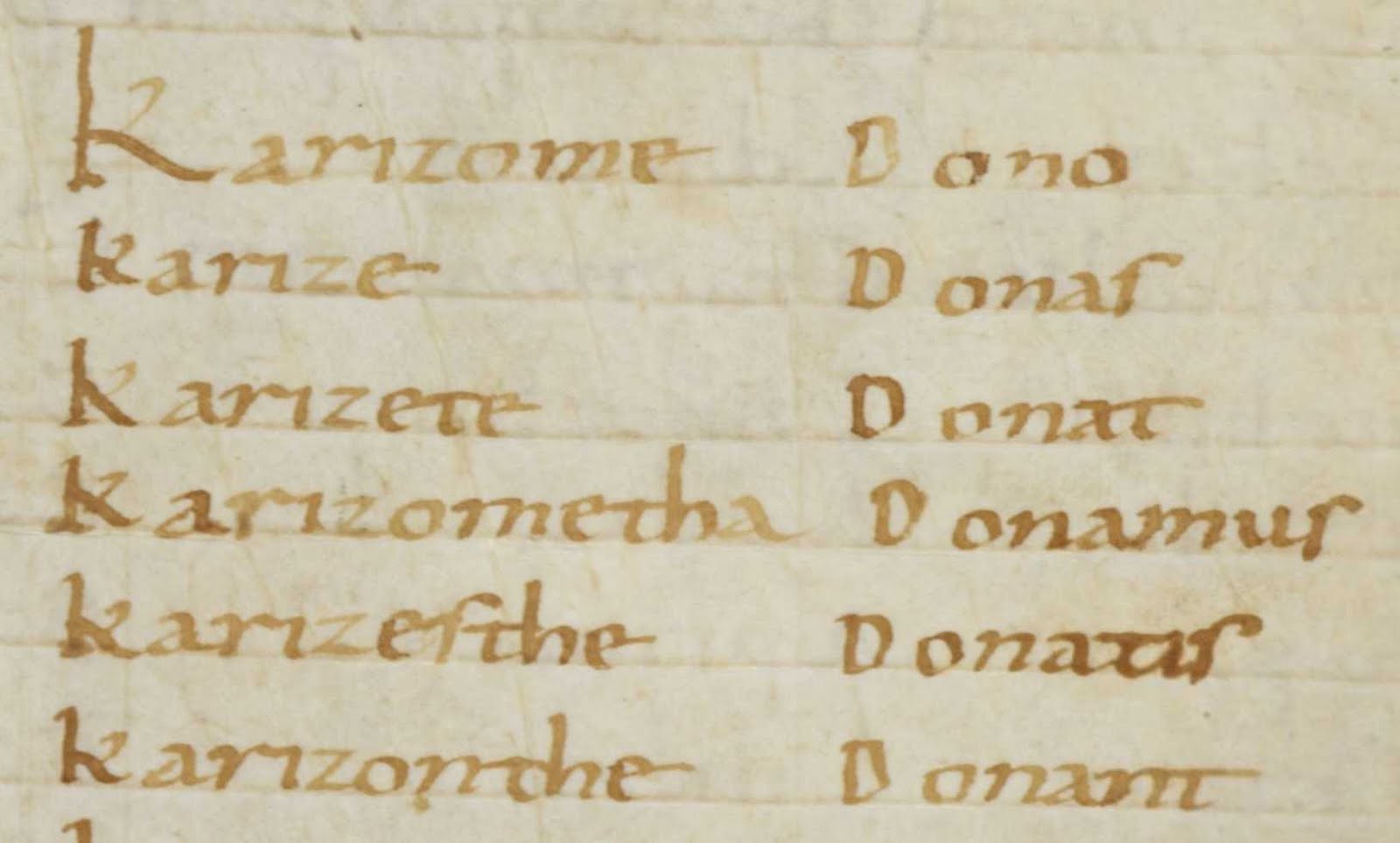
According to Gesenius, the Hebrew word “rimmon” actually means “pomegranate,” and the Arabic equivalent is “rumman”, which is quite similar to the Hebrew and shares the same RMN cognate[1]. De acordo com Genésio, a palavra hebraica Rimom "realmente significa" romã ", eo equivalente em árabe é" Rumman ", que é bastante semelhante ao hebraico e partes do cognato RMN mesmo [1]. The following image would clearly illustrate this relation: A imagem a seguir que ilustram claramente essa relação:

“Pomegranate” is thus the proper translation of “rimmon” in the Bible (Numbers 20:5; Deuteronomy 8:8; 1 Samuel 14:12; Songs 4:3, 6:7). "Romã" é, portanto, a tradução correcta de "Rimmon" na Bíblia (Números 20:05, Deuteronômio 08:08, 1 Samuel 14:12; Songs 4:3, 6:7). 'Rimmon' is also the name of a number of places mentioned in the Bible, specifically the Old Testament, named such because of the number of pomegranates that grow there. "Rimmon" é também o nome de um número de lugares mencionados na Bíblia, mais especificamente no Antigo Testamento, como o nome por causa do número de romãs que crescem lá. As Gesenius states: Como afirma Gesenius:

The pomegranate tree is still found in Syria, Palestine, and Egypt [...] From their abounding in pomegranates, several places received the proper name Rimmon[.][2] A árvore da romã ainda é encontrado na Síria, Palestina e Egito [...] De sua abundante em romãs, em vários locais receberam o nome próprio Rimmon [.] [2]

Examples of such places being named 'Rimmon' can be seen in Joshua 15:32, 19:7; Judges 20:47; 1 Chronicles 4:32 and Zechariah 14:10. Exemplos de lugares como sendo nomeado "Rimmon" podem ser vistas em Josué 15:32, 20:47 19:07, Juízes, 1 Crônicas 4:32 e Zacarias 14:10. Indeed, until today there is a specific place in Palestine called Rimmon (reysh-mem-vav-nun) in Hebrew, and Rammwan/Rummon (raa-meem-waw-nun) in Arabic, and it still exists today. Na verdade, até hoje há um lugar específico na Palestina chamado Rimom (reysh, mem, vav freira), em hebraico, e Rammwan / Rummon (raa, MEEM, waw freira) em árabe, e que ainda hoje existe.

We can see that Rammwan/Rummon is thus the closest Arabic equivalent to the Hebrew “rimmon”, and not “Rahman” as Patriot Tim erroneously asserts. Podemos ver que Rammwan / Rummon é, portanto, mais próximo o equivalente árabe para o hebraico "Rimmon" e não "Rahman", como erroneamente afirma Tim Patriot.

Referring to Strong's on RIMMON, the following entry is found: Referindo-se forte na Rimom, a seguinte entrada é encontrada:

4. 4. A Syrian god (7417)[3] Um deus da Síria (7417) [3]

The BDB Lexicon has more information on RIMMON, and on p. O léxico BDB tem mais informações sobre Rimom, e p. 942 we read that: 942, lemos que:

[Rimmon] n. [Rimom] n. pr. pr. dei; as Rammanu, god of wind, rain and storm; thunder; storm.[4] dei, como Rammanu, o deus do vento, chuva e tempestade, trovão, tempestade [4].

There are two possible etymological explanations for the RIMMON of Syria. Existem duas possíveis explicações etimológicas para a Rimom da Síria. The first is from Gesenius, who says that it is “…perhaps the exalted, from the root RMM.”[5] The other possibility is that the spelling is a deliberate Jewish insult, and this is not uncommon in the Bible. O primeiro é o de Genésio, que diz que é "... talvez os exaltados, a partir da RMM root." [5] A outra possibilidade é que a ortografia é um insulto deliberado judaica, e isso não é incomum na Bíblia. We read that Nós lemos que

“Rimmon” is an epithet of Hadad (Adad in Mesopotamia); the Akkadian form is Ram(m)an. "Rimmon" é um epíteto de Hadad (Adad na Mesopotâmia), a forma acádio é Ram (m) uma. It has been suggested that the Hebrew Rimmon, which is identical to the Hebrew word for “pomegranate,” is a deliberate mispointing of an original Ram(m)an (or something similar) to disparage the deity. Tem sido sugerido que a Rimom hebraico, que é idêntica à palavra hebraica para "romã", é um mispointing deliberada de um original Ram (m) uma (ou algo similar) para denegrir a imagem da divindade. This epithet Rimmon/Ramman is best understood as “thunderer” (cf. Akkadian ramanu “to roar,” hence “to thunder”). Esse epíteto Rimom / Ramman é melhor entendida como "Trovão" (cf. ramanu acadiano "para rugir", daí "a trovão"). Accordingly, the name Hadadrimmon means “Hadad is the thunderer.” Hadad, or Rimmon/Ramman, was the chief diety of the Arameans of Syria[.][6] Assim, o nome Adadremon significa "Hadad é o trovejante." Hadad, ou Rimom / Ramman, foi a principal divindade dos arameus da Síria [.] [6]

In light of Jewish traditions with disparaging name-games in Hebrew, we favour the possibility that calling the Syrian pagan idol as RIMMON was merely an attempt at insulting this pagan deity, and have no connections with “rimmon” meaning “pomegranate”. À luz da tradição judaica com o nome depreciativo de jogos em hebraico, somos a favor da possibilidade de chamar o ídolo pagão da Síria que Rimom foi apenas uma tentativa de insultar esta divindade pagã, e não têm ligações com "Rimmon" significado "romã".

This is already enough to refute the missionary's mendacity. Este já é o suficiente para refutar a mentira missionário. But let us take one step further and look up the meaning of the Arabic ar-rahman, as stated in Hans Wehr's Arabic-English Dictionary: Mas vamos dar um passo adiante e procurar o significado da AR Rahman árabe, tal como referido no Dicionário Hans Wehr em árabe-Inglês:

ar-rahman : the Merciful (ie God)[7] AR Rahman: o Clemente (Deus) [7]

The root of ar-rahman is the word rahma, and from the very same page, we find that the root means A raiz de AR Rahman é o rahma palavra, e da mesma página, vemos que a raiz significa

pity, compassion; human understanding, sympathy, kindness; mercy[8] compaixão, pena, a compreensão humana, solidariedade, bondade, misericórdia [8]

Clearly, we certainly do not see any etymological relation at all with the Hebrew noun RIMMON (). Claramente, nós certamente não vejo qualquer relação etimológica com tudo com o substantivo hebraico Rimom (). Indeed, one does not blindly assume that a word is connected to another simply by the play of sounds, and we need to look at several established rules for finding etymological connections. Na verdade, não é cega supor que uma palavra está ligada a outra, simplesmente pelo jogo de sons, e nós precisamos de olhar para várias regras estabelecidas para encontrar as conexões etimológicas. The rules are: As regras são as seguintes:

    1. 1. Geographic proximity A proximidade geográfica
    2. 2. Shared cognates/roots cognatos Comum / raízes
    3. 3. Relative synonymy sinonímia relativa

So what does this mean? Então, o que significa isto? It means that the languages have to originate near one another, and indeed Hebrew and Arabic are from the same branch and area. Isso significa que as línguas que se originam perto um do outro, e certamente o hebraico eo árabe são do mesmo ramo e região. They have to share the same cognate, and lastly, they have to share the same meaning. Eles têm que compartilhar o mesmo aparentadas e, finalmente, eles têm que compartilhar o mesmo significado. While we do not deny that the Hebrew noun RIMMON conforms with criteria 1, it does not conform with criterias 2 and 3, and hence fails the ruling for determining whether RIMMON is indeed related to the Arabic word ar-rahman. Enquanto nós não negamos que o substantivo hebraico Rimom está em conformidade com os critérios 1, não está em conformidade com critérios 2 e 3 e, portanto, não a decisão para determinar se Rimom é realmente relacionado à palavra árabe AR Rahman. As one of the greatest Philosophers of Language (one of the founding fathers of the field), Ludwig Wittgenstein, put it: Como um dos maiores filósofos da linguagem (um dos fundadores do campo), Ludwig Wittgenstein, colocá-la:

The meaning of a word is its use in the language.[9] O significado de uma palavra é seu uso na linguagem [9].

The equivalent word for ar-rahman in the Hebrew would be “Ha-Rachman”, as found in Rivlin's Hebrew translation of the Qur'?n, 1:1: A palavra equivalente para AR Rahman em hebraico seria "Ha-Rachman", conforme encontrada na tradução do hebraico Rivlin de n o Qur '?, 01:01:

In the name of God, Ha-Rachman, the Merciful[10] Em nome de Deus, Ha-Rachman, o [Misericordioso 10]

Apparently this title is not alien to the South Arabian Christians, for Philip K. Hitti informs us the following: Aparentemente, este título não é estranho para os cristãos árabes do sul, de Philip K. Hitti nos informa o seguinte:

The earlier South Arabian civilization could not have altogether passed away without leaving some trace in its northern successor. A civilização árabe anterior do Sul não poderia ter completamente faleceu sem deixar algum rastro de sua sucessora do Norte. The inscription (542-3) of Abrahah dealing wih the break of the Ma'rib Dam begins with the following words: “In the power and grace and mercy of the Merciful [Rahman-an] and His Messiah and of the Holy Spirit”. A inscrição (542-3) da Abrahah lidar wih a ruptura da barragem de Ma'rib começa com as seguintes palavras: "No poder e graça e misericórdia do [Misericordioso Rahman, um] e Seu Messias e do Espírito Santo" . The word Rahman-an is especially significant because its northern equivalent, al-Rahman, became later a prominent attribute of All?h and one of His names in the Koran and in Islamic theology.[11] A palavra Rahman, um é especialmente importante porque seu equivalente norte, al-Rahman, mais tarde tornou-se um atributo importante de todos os h? E um de seus nomes no Corão e na teologia islâmica [11].

Philip K. Hitti further informs us in a footnote that Philip K. Hitti nos informa em nota que

Rahmanan appears as title of the Christian God in a fifth-century South Arabic inscription.[12] Rahmanan aparece como título do Deus cristão, em uma quinta do século inscrição em árabe do Sul [12].

So we see that the South Arabic Christians themselves using the appelation Rahmanan for their God, and hence we begin to see how perjurious the claims of the missionary really is. Assim, vemos que os cristãos do Sul árabe-se com o epíteto Rahmanan para o seu Deus e, portanto, começamos a ver como perjurious as reivindicações do missionário é realmente.

The Aramaic word for Rachaman/Rahman is rachamanaa, and indeed this is found in the Talmud. A palavra aramaica para Rachaman / Rahman é rachamanaa, e de fato esta é encontrada no Talmud. Consider the Aramaic text of Qiddushin 81b, where it is recommended that those looking to be protected from evil say: Considere o texto aramaico de Qiddushin 81b, onde é recomendado que aqueles que olham para ser protegido de dizer mal;

Rachamanaa nighar beih ba-Satan Rachamanaa nighar Beih ba-Satan
Translation: May the Most Merciful rebuke Satan. Tradução: Que o Misericordioso repreender Satanás.

In the same part of the Talmud, there is a fascinating story about Rabbi Chiyya: Na mesma parte do Talmud, há uma história fascinante sobre o rabino Chiyya:

Rabbi Chiyya bar Ashi hawah raghil kal eedan dahawah nafal l'apeih hawah amar: ha-Rachaman yatsileinu miyetser haraa' Rabino bar Chiyya raghil hawah Ashi dahawah eedan kal l'apeih hawah amar nafal: Rachaman yatsileinu miyetser haraa-ha "
Translation: Rabbi Chiyya bar Ashi had a practice where everytime he prostrated he would say “may the Most Merciful save us from evil inclinations”. Tradução: Rabi bar Chiyya Ashi tinha uma prática onde sempre prostrou dizia "Que o Misericordioso nos salvar de más inclinações".

So, even the great Talmud sages were doing as the Muslims do to this day, prostrating and giving homage to the Most Merciful, ar-rahman. Assim, mesmo os grandes sábios do Talmud estavam fazendo como os muçulmanos fazem a este dia, prostrando e dando homenagem ao Misericordioso, ar-Rahman. This passage from the Talmud is still relevant, as there is yet one more point to be made here. Esta passagem do Talmud ainda é relevante, pois há ainda mais um ponto a ser feita aqui. Later in the story Rabbi Chiyya is tempted by his wife, who asks him to bring him a pomegranate. Mais tarde na história rabino Chiyya é tentado pela sua esposa, que lhe pede para trazer-lhe uma romã. She is quoted as saying: Ela é citada como tendo dito:

aiytei neehaleih l'hakh rumanaa d'reish tsutsitaa shawur aazal neehaleih aiytei l'rumanaa hakh d'shawur tsutsitaa reish aazal
Translation: Bring me that pomegranate on the uppermost branch. Tradução: Traga-me que a romã no galho mais alto.

The word for pomegranate in the Aramaic is rumanaa, which is quite close to the Arabic rumman. A palavra de romã no aramaico é rumanaa, que é bastante próximo ao Rumman árabe. What we learn from this is that in Hebrew, Arabic, and even Aramaic (from this look at Qiddushin 81b), there is no connection between the word for “Most Merciful,” a name given to God, and pomegranate, a name heaped upon a pagan deity. O que podemos aprender com isto é que, em hebraico, árabe e aramaico ainda (a partir deste olhar Qiddushin 81b), não há nenhuma conexão entre a palavra para "Misericordioso", um nome dado a Deus, e romã, um nome empilhou em cima uma divindade pagã.

This is further collaborated when we refer to the root word of ha-rachman, which is rachuwm, in Strong's number 7349 and find the following: Isto é ainda mais colaborou quando nos referimos a palavra raiz de Rachman ha, que é rachuwm, no Forte de número 7349 e encontramos o seguinte:

rachuwm rakh-oom`; from 7355; compassionate:- full of compassion, merciful.[13] rachuwm Rakh-oom », a partir de 7355, compassivo: - cheio de compaixão, misericórdia [13].

Thus we see that rachuwm and rahma share the same RHM cognate, and thus we have established a solid etymological connection between both words. Assim, vemos que rachuwm e compartilhar rahma do cognato RHM mesmo e, portanto, nós estabelecemos uma ligação etimológica sólida entre ambas as palavras. Of course, there is another Hebrew word that is even closer to raheem (RHYM) than rachuwm is, and that is the exact Hebrew equivalent! Claro, não há outra palavra hebraica que está ainda mais perto de Raheem (RHYM) rachuwm que é, e que é o equivalente hebreu exato! Consider the following: Considere o seguinte:

Summary Resumo

As the final nail in the coffin, let us summarise what we have discussed above: Conforme o último prego no caixão, vamos resumir o que discutimos acima:

1) RIMMON is a Syrian pagan god of thunder and the name itself is a noun and has nothing in common with ar-rahman, which is an attribute/appellation of God, as any Muslim schoolchild would know. 1) Rimom é um pagão da Síria deus do trovão e do nome próprio é um substantivo e não tem nada em comum com AR Rahman, que é um atributo / denominação de Deus, como qualquer aluno muçulmano saberia.

2) RIMMON has its roots in the Akkadian Rammanu, meaning “thunderer” or “to roar, to thunder” and its only connection to the “pomegranate” (rimmon) is that this is part of a deliberate Jewish insult against this pagan idol. 2) Rimom tem suas raízes no Rammanu acadiano, que significa "Trovão" ou "estrondo, um trovão", e sua única ligação com o "romã" Rimom () é que isto faz parte de um insulto deliberado dos judeus contra o ídolo pagão. “Rahman” came from a TOTALLY different root word, rahma, which means “pity; compassion; sympathy”, etc. "Rahman" veio de uma palavra de raiz totalmente diferente, Rahma, que significa "compaixão; compaixão," simpatia, etc

3) RIMMON is the Syrian “god of wind, rain and storm”. 3) Rimom é a Síria "deus do vento, chuva e tempestade." By no stretch of imagination can this be applied to ALLAH, the God of Abraham(P), Moses(P), Por nenhum estiramento da imaginação isso pode ser aplicado a Deus, o Deus de Abraão (P), Moisés (P), Jesus Jesus (P) and (P) e Muhammad Muhammad (P)! (P)! Further, we have seen how the South Arabian Christians themselves use the appelation Rahman-an (equivalent to the northern ar-Rahman) for God, and how the Aramaic phrase Rachamanaa is found in the Jewish Talmud. Além disso, vimos como os cristãos árabes do sul-se usar o epíteto Rahman, um (o equivalente à norte-AR Rahman) para Deus, e como a frase em aramaico Rachamanaa é encontrado no Talmude.

4) Nowhere in Strong's or in the BDB/Gesenius lexicons do we find any correlation of RIMMON with the Arabic word ar-rahman or its root word rahma. 4) Em nenhum lugar do Forte ou no BDB / léxicos Gesenius encontramos nenhuma correlação de Rimom com a palavra AR Rahman árabe ou rahma sua palavra de raiz. The Hebrew equivalent for rahma is the word rachuwm. O equivalente hebraico para rahma rachuwm é a palavra. Both rahma (Ar.) and rachuwm (Heb.) share the same RHM cognate. Ambos Rahma (Ar.) e rachuwm (Heb.) partilham o mesmo cognato LHC.

Conclusion Conclusão

It is evident that the missionary “Patriot Tim” clearly resorts to nonsensical and shoddy scholarship in order to discredit Islam, no matter how silly the 'theories' that he repeats. É evidente que o missionário "Patriot Tim" claramente recorre à bolsa absurdo e de má qualidade, a fim de desacreditar o Islã, não importa quão tola as teorias "que ele repete. We suggest that “Patriot Tim” should stick to his current daytime occupation instead of trying to pass himself off as some sort of etymologist-cum-archeologist and parroting verbatim from monolingual polemicists like Morey. Sugerimos que o "Patriot Tim" deve manter a sua ocupação atual do dia ao invés de tentar se fazer passar como uma espécie de etimologista-cum arqueólogo e repetindo literalmente a partir de polemistas como monolíngüe Morey.

And only God knows best. E só Deus sabe melhor.

References Referências

[1] William Gesenius, Hebrew and English Lexicon , (Crocker & Brewster, 1865), p. [1] Gesenius William, hebraico e Lexicon Inglês (Crocker & Brewster, 1865), p. 982; cf JM Cowan (ed.), Hans Wehr's Arabic-English Dictionary , p. 982, CF JM Cowan (ed.), Dicionário de Inglês-Árabe de Hans Wehr, p. 360 360

[2] William Gesenius, Op. [] William Gesenius 2, op. Cit. , p. Cit., P. 982 982

[3] James Strong, The New Strong's Exhaustive Concordance of the Bible , under the word “RIMMON” [3] James Strong, o forte New Concordância Exaustiva da Bíblia, sob a palavra "Rimmon"

[4] Under , The Brown-Driver-Briggs Hebrew-English Lexicon , p. [4] De acordo com, A-Driver-Briggs Léxico Hebraico-Inglês Brown, p. 942 942

[5] William Gesenius, Op. [William Gesenius 5], op. Cit. Cit.

[6] Frederic W. Bush, “HadadRimmon”, The Anchor Bible Dictionary , (Doubleday 1992), Vol. [6], Frederic W. Bush, Adadremon ", The Anchor Bible Dictionary (Doubleday, 1992), vol. 3, p. 3, p. 13 13

[7] JM Cowan (ed.), Hans Wehr's Arabic-English Dictionary , p. [7] JM Cowan (ed.), Dicionário de Inglês-Árabe de Hans Wehr, p. 332 332

[8] Ibid. [] Ibid 8.

[9] Wittgenstein, Philophische Untersuchungen , pt. [9] Wittgenstein, Untersuchungen Philophische, pt. I, sect. I, da seita. 43 43

[10] Yosef Yo'el Rivlin, Alkur'an / tirgem me-`Arvit , Devir, Tel Aviv (1936-1945) [10] Yosef Yo'el Rivlin, Alkur'an / Tirgem-me », Arvit, Devir, Tel Aviv (1936-1945)

[11] Philip K. Hitti, [11] Philip K. Hitti, History História of the Arabs , The Macmillan Press, Ltd (1970), p. dos árabes, The Macmillan Press Ltd (1970), p. 105 105

[12] Ibid. [] Ibid 12.

[13] James Strong, op. [13] James Strong, op. cit , under the word “rachuwm” , p. cit, sob a palavra rachuwm ", p. 131 131

  • Digg
  • Facebook
  • Google Bookmarks
  • LinkedIn
  • del.icio.us
  • MySpace
  • Live
  • NewsVine
  • Propeller
  • Reddit
  • BlinkList
  • Sphinn
  • StumbleUpon
  • SphereIt
  • Technorati
  • Tumblr
  • Fark
  • Yahoo! Buzz
  • Posterous
  • Twitter
    1. [...] Well today, Islamic Awareness, a website which I would consider a highly-authoritative source of information with regard to Christian missionary, has updated their paper refuting this assertion and you can see it here. [...] Bem, hoje, Islamic Awareness, um site que eu considero uma fonte altamente autorizada de informações no que diz respeito ao missionário cristão, tem actualizado o seu papel refutar essa afirmação, e você pode vê-lo aqui. A related Christian polemic and postulation regarding Rahman being equivalent to “Rimmon” was also dealt in the past. A polêmica relacionada cristã e postulação quanto Rahman equivalente a "Rimmon" também foi tratado no passado. [...] [...]

    2. [...] 20 December 2005Filed under Polemical Rebuttals, History Mohd Elfie Nieshaem Juferi It has always been the missionary tradition to jump from one nefarious claim to another in trying to ascertain the nature of “Allah”. [...] 20 de dezembro 2005Filed sob Polêmicos réplicas, História Mohd Elfie Nieshaem Juferi Ela sempre foi a tradição missionária para saltar de uma reivindicação nefasto para outro na tentativa de verificar a natureza de "Allah". We have previously shown some of the more common theories that they propagate, ranging from Allah(T) being the “moon god” to Ar-Rahman being a term for “pomegranate”. Nós temos mostrado previamente algumas das teorias mais comuns que se propagam, variando de Allah (T), sendo a lua "deus" para Ar-Rahman é um termo para "romã". A recent missionary allegation has also been hurled against a beatific salutation of the Prophet Muhammad sallallah `alayhi wa sallam. A alegação recente missionária também foi arremessado contra uma saudação beatífica do sallallah Profeta Muhammad `alayhi wa sallam. Now a new postulation of the missionary has been made in their article, namely that “Allah” is synonymous with the god Hubal of the pagan Makkans! Agora, uma nova postulação do missionário foi feita em seu artigo, ou seja, que "Allah" é sinónimo de Hubal deus do Makkans pagã! [...] [...]

    Leave a Reply Deixe uma resposta

    You must be Você deve ser logged in logado to post a comment. postar um comentário.