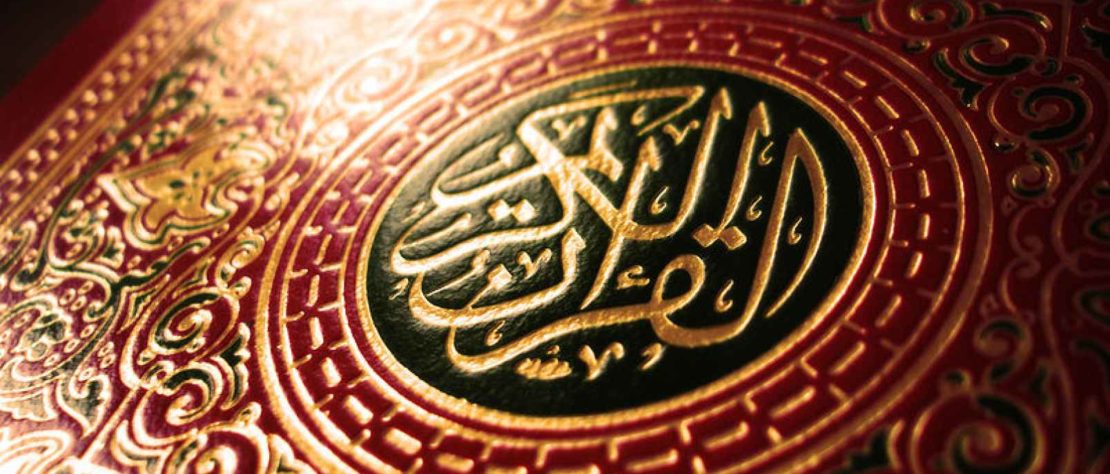
In ein Artikel von seinem hat Christoph Heger riskiert, aufzudecken, was er als die vor-Islamische Grundschicht eines ursprünglich christlichen Textes im Qur' anic Sura 96 unterstellte. Lassen Sie uns zuerst eine schöne englische übertragung des Teils von diesem Sura in Erwägung darstellen hier: Recite im Namen des thy Lords, der verursachte Zentrale zu sein „Rekonstruktion“ von dieses Qur' anic Sura war sein Anspruch, dem entsprechend einem Zitieren seiner Arbeit „Majaz Al'“ Qur durch Al-Farra', Abu `Ubaida hielt, daß das Verb „qara' a“ im surah 96:1 (das traditionsgemäß als „gelesen“ „recite“ gedeutet wird), die gleiche Bedeutung wie das Verb hat dhakara, nämlich „rufen Sie“, „Laud“, „Lob“ hervor. Für einen alten christlichen hymnodical Text in Qur' anic Sura 96 plädieren, soll dieser Anspruch vom Angelwert für ihn vorschlägt, gegensätzlich zum traditionellen islamischen Verständnis dieser Verse, etwas wie ein christlicher Priester am Kopf einer Versammlung und bittet um um sie, daß den Namen ihres Lords „hervorrufen Sie“. Einerseits wenn es nachgewiesen werden kann daß dieser Anspruch, nach dem die Nabe Christoph Hegers „der Rekonstruktion“ von S? Ra 96 steht still, ist ungenau und sehr unzuverlässig durch die gleiche Berechtigung, von der es zitiert, gemeint ist, dann entfernt es den Boden von unter seinem gesamten S? Ra „Rekonstruktion.“ Sie ist genau diese, die wir kurz im folgenden demonstrieren. (a) Um zu erklären daß das Verb „qara' a“ im sura 96:1 (= „recite“) die gleiche Bedeutung wie das Verb „dhakara“ hat (= rufen Sie,“ „Laud,“ „Lob“) hervor, stellt Christoph Heger die folgenden Quellen zur Verfügung: (i) Noldeke, „Geschichte DES Qorans,“ I, 81, die, entsprechend Christoph Heger, weiter zitiert: Meine Anmerkungen: (i) Now, please bear in mind that Noldeke, in his cited work, does not even hint at the work of the celebrated ancient Kufan grammarian Al-Farra’ (d. 207 AH/ 822 CE). What Noldeke actually refers to is (the German equivalent of) “F. ad locum“. Now this “F.,” according to the arbitrary abbreviation system adopted by Noldeke-Schwally, actually refers to Fakharaddin ar- Razi’s work, not to Al-Farra’s work! Therefore, involving Al-Farra’ in this matter, obviously in an attempt to gain profit — vis-a-vis Heger’s above-cited claim — from his grammatical prestige, when the secondary source actually consulted never even mentions him in the first place, is the undeniable proof of Christoph Heger’s blunder. (ii) In the actual treatment of Al-Farra’ of the beginning of Sura 96 from his primary Qur’anic work Ma`ani l-Qur’an, nowhere does Al-Farra’ say himself, or cite Abu `Ubaida, to the effect that “qara’a” in sura 96:1 has the same meaning as “dhakara.” (iii) On the other hand, Fakharaddin ar-Razi of the beginning of Sura 96 from his primary Qur’anic work Tafsir-i-Kabir (the real Mr. “F.” of Noldeke-Schwally) does provide an utterance of Abu `Ubaida, according to which he believed that the preposition “Bi” (i.e., “in”) in the phrase: “Recite in the name of thy Lord”, was a “surplus addition”, and the verb “qara’a” (= “recite”) here was much like the verb “dhakara” (= invoke,” “laud,” “praise”). But it is very important to note that Fakharaddin ar-Razi quotes this as a forlorn opinion among the many others quoted, and which he rejects as being “weak” on three grounds. (iv) Furthermore, I have also checked the original work of Abu `Ubaida, Majaz al Qur’an2 and it too does not contain this alleged opinion ascribed to him (that “qara’a” in 96:1 has the same meaning as “dhakara”). The fact, that this alleged opinion attributed to Abu `Ubaida is not contained in the critical edition of his work prepared by Fuat Sezgin, also further strengthens our contention, based upon Fakharaddin ar-Razi’s rejection of the same, that this opinion had a dubious chain of transmission as well as was fairly suspicious even on grammatical grounds. In light of this investigation, we have seen that the opinion, that “qara’a” in 96:1 has the same meaning as “dhakara,” was wrongly claimed by Christoph Heger to have reproduced by Al-Farra’, when it was actually cited by Fakharaddin ar-Razi, who had, — after citing it — rejected it in the same sentence owing to its grammatical untenability and singular, suspicious chain, and has given three reasons of his own for its rejection. Consequently, Christoph Heger’s “reconstruction” of Sura 96, which was primarily based on this opinion, falls.
[hergestellter] Mann vom Blut geronnen.
Recite! Thy Lord ist erstaunliche Art
Wer, durch die Feder, Menschheit unterrichtet hat
Sachen, die sie nicht kannten (seiend blind).1
(ii) Al-Farra', das, wieder entsprechend Christoph Heger, ein Zitieren [in seiner Arbeit] „des Als Qur Majaz' Abu `Ubaidas.“ reproduziert
(iii) So die entscheidende Quelle des Anspruches, - dem „qara' a“ im sura 96:1 (= „recite“) die gleiche Bedeutung wie „dhakara“ (=invoke,“ „Laud,“ „Lob“) hat, - ist „Al Qur Majaz' Abu `Ubaidas.“
Subscribe
Subscribe Articles With
Bloglines, Google Reader, My MSN, Netvibes, Newsburst
Newsgator, Odeo, Pluck, Podnova, Rojo, My Yahoo!, Desktop Reader
Liaquat Samma said on 4 August 2006:
Dear Sir
I also think Dr Heger is wrong. qara’ and dhakara are two different roots with different meanings. Qara’ means to say something to others. It originally means to collect words in one’s mind and then utter them as a thought expression. These meanings can be found in TAJ al urus and LANE’s Lexicon.Generally the meanings given are RECITE and READ. But in English the concept of reciting is to say something by memorizing something and producing from one’s mind without seeing anything on the paper. Reading implies looking at words and understanding the thoughts.
Iqra implies saying something in words and sentences, or speaking about something to state something. Thus in Arabic Iqra imlies SPEAKING about some facts. Saying something in words and stating the facts is the right concept of this imperative form of the root.
So in 96:1, Allah, the One and the Only God, commands Mohammed, His Prophet, to say to others and declare that Allah is the Lord and Creator of man. These three attributes are to be announced by the Prophet and to be accepted by the humans. Allah means the particular and one god only because the pagan Arabs beleuved in many gods other than Allah. Ilah, i.e. god means one who is worshipped, served, and obeyed by others. The point made here is that Allah is the Lord, one who provides everything for the nourishment of the humans and command them like a master. Therefore only Allah should be worshipped and obeyed. Allah is Creator of humans. This creation began with a clot of blood and then took the final shape of human. This process of development is emphasized here to show the piwers of God. So only God develops humans physically as well as mentally by proving means of development i.e guidace in life, by giving commands to be obeyed.This includes argumentation which is very convincing. The pagan Arabs accepted these facts and arguments and then agreed to srve Allah only and leave worshipping the other gods. Hence we understand that these words were very effective when preached.
Dhakar is mentioning and reminding or remembering something .
Liaquat Samma