If you're new here, you may want to get regular updates via Ak ste tu nový, možno budete chcieť získať pravidelné aktualizácie cez RSS feed RSS feed . . Thank you for visiting! Ďakujeme vám za návštevu!
Mohd Elfie Nieshaem Juferi Mohd Elfi Nieshaem Juferi
The Christian missionaries have engaged in bitter polemics since the advent of Islam. Kresťanskí misionári sa zapojili do horké polemiky, pretože príchodom islamu. One of their common allegations is that they claim that in Sura' Al-Maiah (5):119, the Qur'an made a “mistake” in claiming that the Trinity consists of God, Jeden z ich spoločných tvrdení je, že sa tvrdí, že v Al Súra '-Maiah (5): 119, Qur'an sa "chybu" v tvrdení, že Trojica sa skladá z Boha, Jesus Ježiš and Mary. a Mary. The said verse is as follows: Povedal verš takto:
“And behold! "A hľa! God will say: 'O Jesus the son of Mary! Boh povie: 'Ježišu, synu Máriin! Didst thou say unto men, 'Take me and my mother for two gods beside Allah' He will say: 'Glory to Thee! Si povedali muži, 'Vezmi ma a moju matku dvoch bohov vedľa Boha' on povie: 'Sláva tebe! Never could I say what I had no right (to say). Nikdy by som mohol povedať, čo som nemala žiadne právo (povedať). Had I said such a thing, Thou wouldst indeed have known it. Keby som povedal niečo takéto: "Ty chceš naozaj vedieť to. Thou knowest what is in my heart, though I know not what is in Thine. Ty vieš, čo je v mojom srdci, aj keď neviem, čo je v tvojej. For Thou knowest in full all that is hidden.'” (Qur'an 5:116) Pre ty vieš v plnom rozsahu všetko, čo je skryté. '"(Korán 5:116)
Upon careful observation, one would indeed see that God have indeed spoken the Truth: Po starostlivom pozorovaní, jeden by skutočne vidieť, že Boh skutočne hovoril pravdu:
Under the heading MARY , we find the following information that supports the above argument. Pod hlavičkou Márii, nájdeme nasledujúce informácie, ktoré podporuje vyššie uvedený argument.
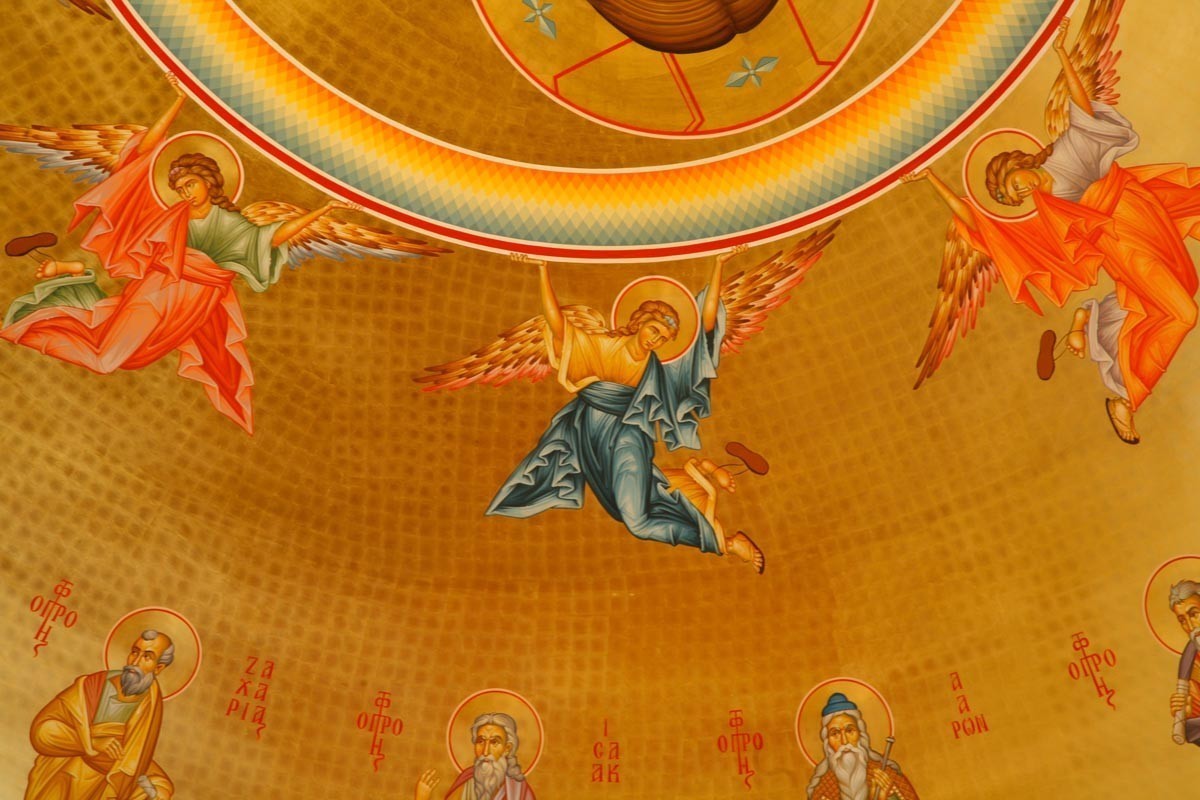
Mary's exalted position also earned her the titles Mother of God and Coredemptrix, suggesting that she played an active role in the redemption of mankind along with her son. Mary vysokého postavenia takisto získal svoje tituly Matky Božej a Coredemptrix, čo naznačuje, že hrala aktívnu úlohu pri vykúpenie ľudstva spolu so svojím synom. The Mother of God title was applied early in church Matky Božej hlavy bol použitý už v kostole history histórie , based on the notion that Jesus was fully God as well as human. , Založený na predstave, že Ježiš bol úplne Boh i človek. This was established as a doctrine in the 4th century. To bolo založené ako doktrína v 4. storočí. In the Eastern churches this doctrine played a major devotional role and became a favorite subject for icon painters. V kostoloch východnej tejto doktríny hral hlavnú úlohu zbožný a stal sa obľúbeným predmetom na ikonu maliarov. During the Reformation era it was accepted by both Catholic and Protestant scholars, though Mary's role in Protestant theology has declined markedly since then.[1] V čase reformácie bola prijatá aj katolícke a protestantské učenci, aj keď Mary úloha v protestantskej teológie znížil výrazne od tej doby [1].
It is clear that for all practical purpose and in reality, when the issue is of worshipping, venerating, deifying and/or idolizing is concerned, it is Mary – the theotokos (Mother of God), and not the Holy Ghost, which has that kind of rank and status. Je zrejmé, že pre všetky praktické účely, a v skutočnosti, keď otázka je uctievanie, ctiť, deifying a / alebo idol sa týka, to je Mary - Theotokos (Bohorodička), a nie Ducha Svätého, ktorý má tento druh hodnosť a postavenie. Briefly, in terms of veneration, the idols of Jesus and Mary are treated as deities. Stručne povedané, pokiaľ ide o uctievanie, sú modly Ježiša a Márie považované za božstvá. The Holy Ghost is not venerated as a deity in the manner that Jesus' and Mary's idols were treated. Duch Svätý nie je uctievaný ako božstvo spôsobom, že Ježiš 'a Mary idoly boli liečení. The quoted verse from the Holy Qur?an questions such Divine Rank and Status that have been assigned by the followers of Jesus to him and his mother. Citoval verše zo svätého Qur? Otázky ako Božie Rank a Status, ktoré boli pridelené nasledovníci Ježiša, aby jemu a jeho matke.
The quoted verse does not speak of the Church developing the enigmatic doctrine of Trinity in the fourth century. Citoval verš nehovorí cirkvi rozvojových tajomný doktrínu Trojice vo štvrtom storočí. It is in fact accepted that the doctrine of Trinity evolved and took its final shape nearly 350 years of CE. To je v skutočnosti pripustil, že doktrína Trojice vyvinul a vzal do svojej finálnej podoby takmer 350 rokov CE. Bart D. Ehrman observes that Bart D. Ehrman uvádza, že
Christianity Kresťanstvo in the second and third centuries was in a remarkable state of flux. v druhom a treťom storočí bol v pozoruhodnej stave toku. To be sure, at no point in its history has the religion constituted a monolith. Ak chcete mať istotu, v žiadnom okamihu v jeho histórii náboženstva tvoria monolit. But the diverse manifestations of its first three hundred years – whether in terms of social structures, religious practices, or ideologies – have never been replicated. Ale rozmanité prejavy z jej prvých troch sto rokov - či už ide o sociálnych štruktúr, náboženských praktík, alebo ideológie - nikdy neboli replikované.
Nowhere is this seen more clearly than in the realm of theology. Nikde to nie je vidieť jasnejšie než v oblasti teológie. In the second and third centuries there were, of course, Christians who believed in only one God; others, however, claimed that there were two Gods; yet others subscribed to 30, or 365, or more. V druhom a treťom storočí tam boli, samozrejme, kresťania, ktorí verili v Boha len jeden, iní však tvrdil, že existujú dvaja bohovia, ale iní pripojila až 30, alebo 365, alebo viac. Some Christians accepted the Hebrew Scriptures as a revelation of the one true God, the sacred possession of all believers; others claimed that the scriptures had been inspired by an evil deity. Niektorí kresťania prijala hebrejské Písmo ako zjavenie jediného Boha, posvätnej držanie všetkých veriacich, iní tvrdili, že biblia bola inšpirovaná zlé božstvo. Some Christians believed that God had created the world and was soon going to redeem it; others said that God neither had created the world nor had ever had any dealings with it. Niektorí kresťania veria, že Boh stvoril svet a čoskoro bude ho uplatniť, iní hovorili, že Boh ani stvoril svet, ani nikdy nemal žiadne rokovania s ním. Some Christians believed that Christ was somehow both a man and God; others said that he was a man, but not God; others claimed that he was God but not a man; others insisted that he was a man who had been temporarily inhabited by God. Niektorí kresťania veria, že Kristus bol nejako aj človekom a Bohom, iní hovorili, že on bol muž, ale nie Boh, iní tvrdili, že on bol Boh, ale človek, iní trvali na tom, že on bol muž, ktorý bol dočasne obývané Boh . Some Christians believed that Christ's death had brought about the salvation of the world; others claimed that his death had no bearing on salvation; yet others alleged that he had never even died.[2] Niektorí kresťania veria, že Kristova smrť priniesla spásu sveta, iní tvrdili, že jeho smrť nemala žiadny vplyv na spasenie, ale iní tvrdia, že on nikdy dokonca zomrel [2].
So, in conclusion, there is no point calling the modern-day Trinitarian Christianity as 'true' Christianity and all others as 'false' since the evolution of this doctrine itself is very late. Takže na záver, že nemá zmysel volať moderné-dňový Trinitarian kresťanstvo ako 'true' kresťanstvo a všetky ostatné ako 'false', pretože vývoj tejto doktríny sama o sebe je veľmi neskoro. The early Christianity themselves had bizarre beliefs about their doctrine as well as their Scriptures. Skoré kresťanstvo sa mal bizarné presvedčenie o svojej doktríny, rovnako ako ich Písma.
And only God knows best. A len Boh vie najlepšie.
References Odkazy
[1] Compton's Interactive Encyclopedia (1995), under the heading “Mary” [1] Compton je interaktívna encyklopédia (1995), pod nadpisom "Mary"
[2] Bart D. Ehrman, The Orthodox Corruption Of Scripture: The Effect Of Early Christological Controversies On The Text Of The New Testament , 1993, Oxford University Press, London & New York, p. [2] Bart D. Ehrman, ortodoxná korupcia Scripture: Vplyv ranne kristologický polemiky o znenie nového zákona z roku 1993, Oxford University Press, Londýn a New York, s. 3 3
One Response for Jeden Citlivosť prístroja pre "Does the Qur'an Say that Mary Was Worshipped As Part of The Trinity?" "Má Qur'an Povedz, že Mária bola Worshipped ako súčasť Trojica?"
You must be Tie musia byť logged in prihlásený to post a comment. aby ste mohli písať komentár.
The obvious conclusion is that for all practical purpose and in reality, when the issue is of Worshipping, Venerating, Deifying and/or Idolizing, it is Mary – the “Mother of God” and not the Holy Ghost has that kind of rank and status. Zrejmé, záver je, že pre všetky praktické účely, a v skutočnosti, keď otázka je Worshipping, ctiť, Deifying a / alebo idol, to je Mary - "Matka Božia", a nie Duch Svätý má tento druh hodnosť a postavenie . Briefly, the historical figures of Jesus and Mary are venerated as Deities. Stručne povedané, sú historické postavy Ježiša a Márie uctievaná ako božstvá. The Holy Ghost is not venerated as a Deity. Duch Svätý nie je uctievaný ako božstvo.
The quoted verse from the Holy Qur'an questions such Divine Ranks and Status that have been assigned by the followers of Jesus to him and his mother. Citoval verše zo svätého Koránu otázky, ako božskej hodnosti a postavenia, ktoré boli pridelené nasledovníci Ježiša, aby jemu a jeho matke. The verse does not speak of the Church developed enigmatic Doctrine of Trinity. Verš nehovorí o Cirkvi vyvinula tajomný doktrína Trojice.
Theologically speaking, the concept of Holy Ghost as 'Filioque'(“a double procession”) was added to the Original Doctrine much later. Teologicky povedané, poňatie Ducha Svätého ako 'Filioque' ("dvojité sprievod") bola pridaná k pôvodnej doktríny oveľa neskôr. As taught by the Greek theologians and advocated by St. Augustine, it simply makes the Holy Ghost a “go-between” communications or things that proceed from the Father and is received by an individual via Jesus Christ. Ako učil grécka teológov a presadzuje St Augustine, to jednoducho robí Duch Svätý "go-medzi" komunikácie alebo veci, ktoré vychádzajú z Otca a je obdrží individuálne prostredníctvom Ježiša Krista. One may argue that since the Holy Ghost emanates from God the Father, it is also God. Dá sa namietať, že od Ducha Svätého, pochádza od Boha Otca, je to tiež Boh. In reality, this would only be possible if there was a “total emanation” (100% transfer). V skutočnosti by to možné iba v prípade, že bol "celkom zosobnením" (100% transfer). If that be the case, then the Primary Source has either annihilated Himself (Itself) or has produced a Clone. Ak by to tak bolo, potom primárny zdroj buď zničil sám (sám) alebo vyrobené Clone. God the Father still exists and Christians with their Trinitarian Beliefs yet claim God is One. Boh Otec stále existuje a kresťanmi s ich Trinitarian Viery napriek tomu tvrdí, Boh je jeden.
During his ministry, Jesus Christ had taught in very explicit language to worship the “Father in Heaven” (see Matthew 6:5-13). Počas jeho ministerstvo, že Ježiš Kristus učil vo veľmi vyjadrovaním uctievať "Otec v nebesiach" (pozri Matúš 6:5-13). Jesus never ever taught his followers to make images of him and/or his mother and then venerate either of them. Ježiš nikdy učil svojich nasledovníkov, aby sa obrazy z neho a / alebo jeho matka, a potom sa ctiť jeden z nich. In this regards, the Protestants consider themselves a step ahead and reformed than their counterparts. V tejto oblasti, protestanti považujú za krok vpred a reformovanej ako ich náprotivky.
The quoted verse from the Holy Qur'an is a direct challenge to those who make the graven images of Jesus and Mother Mary. Citoval verše z Koránu, je priamou výzvou k tým, kto si rytiny Ježiša a Panny Márie. The Almighty God in the Second of the Ten Commandments also warns mankind against making of graven images and worshipping them. Všemohúci Boh v druhom z desiatich prikázaní tiež varuje ľudstvo pred uskutočnením rytiny a uctievať je. (See Exodus 20:4). (Pozri Exodus 20:4).