If you're new here, you may want to get regular updates via Om du är ny här, kan du få regelbundna uppdateringar via RSS feed RSS . . Thank you for visiting! Tack för besöket!
Mohd Elfie Nieshaem Juferi Mohd Elfie Nieshaem Juferi
The Christian missionaries have engaged in bitter polemics since the advent of Islam. De kristna missionärerna har engagerat sig i bitter polemik sedan tillkomsten av islam. One of their common allegations is that they claim that in Sura' Al-Maiah (5):119, the Qur'an made a “mistake” in claiming that the Trinity consists of God, Ett av deras gemensamma påståenden är att de hävdar att i Sura "Al-Maiah (5): 119, gjorde Koranen ett" misstag "för att hävda att treenigheten består av Gud, Jesus Jesus and Mary. och Mary. The said verse is as follows: Nämnda vers är följande:
“And behold! "Och se! God will say: 'O Jesus the son of Mary! Gud kommer att säga: "O Jesus, Marias son! Didst thou say unto men, 'Take me and my mother for two gods beside Allah' He will say: 'Glory to Thee! Gjorde du säga till människorna, "Ta mig och min mamma för två gudar vid sidan av Allah" Han kommer att säga: "Ära till Dig! Never could I say what I had no right (to say). Aldrig kunde jag säga vad jag hade rätt (att säga). Had I said such a thing, Thou wouldst indeed have known it. Hade jag sagt något sådant, skulle du verkligen ha vetat det. Thou knowest what is in my heart, though I know not what is in Thine. Du vet vad som finns i mitt hjärta, fast jag vet inte vad som finns i ditt. For Thou knowest in full all that is hidden.'” (Qur'an 5:116) Ty du vet ju fullt allt som är dolt. ' "(Koranen 5:116)
Upon careful observation, one would indeed see that God have indeed spoken the Truth: Efter noggrann observation, skulle man ser verkligen att Gud verkligen har sagt sanningen:
Under the heading MARY , we find the following information that supports the above argument. Under rubriken MARY, hittar vi följande information som stöder påståendet.
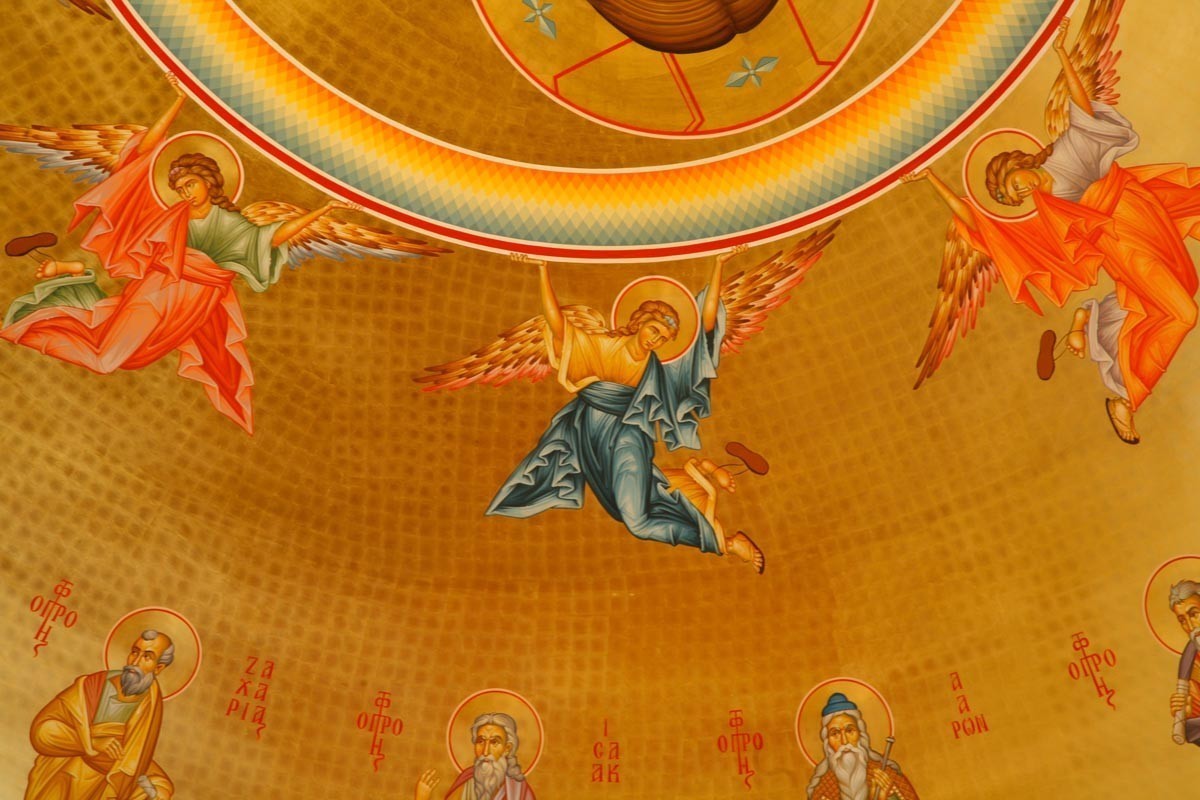
Mary's exalted position also earned her the titles Mother of God and Coredemptrix, suggesting that she played an active role in the redemption of mankind along with her son. Marias upphöjda ställning intjänade också hennes titlarna Guds moder och Coredemptrix, vilket tyder på att hon spelade en aktiv roll vid inlösen av mänskligheten tillsammans med sin son. The Mother of God title was applied early in church Gudsmoder titel tillämpades tidigt i kyrkan history historia , based on the notion that Jesus was fully God as well as human. , Bygger på tanken att Jesus var helt Gud och människa. This was established as a doctrine in the 4th century. Detta inrättades som en doktrin i den 4: e århundradet. In the Eastern churches this doctrine played a major devotional role and became a favorite subject for icon painters. I de orientaliska kyrkorna denna doktrin spelat en stor roll Hängivenhet och blev en favorit ämne för ikon målare. During the Reformation era it was accepted by both Catholic and Protestant scholars, though Mary's role in Protestant theology has declined markedly since then.[1] Under reformationen eran den accepterades av både katolska och protestantiska forskare, även om Marias roll i protestantiska teologi har minskat markant sedan dess. [1]
It is clear that for all practical purpose and in reality, when the issue is of worshipping, venerating, deifying and/or idolizing is concerned, it is Mary – the theotokos (Mother of God), and not the Holy Ghost, which has that kind of rank and status. Det är klart att det för alla praktiska ändamål och i verkligheten, när det handlar om att tillbe, venerating, gudsförklarande och / eller idoliserar berörs, det är Mary - Marie födelse (Guds moder), och inte den Helige Ande, som har att typ av rang och status. Briefly, in terms of veneration, the idols of Jesus and Mary are treated as deities. Kortfattat, i termer av vördnad, är idolerna på Jesus och Maria behandlas som gudar. The Holy Ghost is not venerated as a deity in the manner that Jesus' and Mary's idols were treated. Den Helige Ande är inte vördas som en gudom på det sätt som Jesus och Marias avgudar behandlades. The quoted verse from the Holy Qur?an questions such Divine Rank and Status that have been assigned by the followers of Jesus to him and his mother. Den citerade versen från den heliga Koranen? En sådana frågor Divine Ranking och status som har fått i uppdrag av Jesu efterföljare till honom och hans mor.
The quoted verse does not speak of the Church developing the enigmatic doctrine of Trinity in the fourth century. Den citerade versen talar inte i kyrkan utveckla gåtfulla läran om treenigheten i det fjärde århundradet. It is in fact accepted that the doctrine of Trinity evolved and took its final shape nearly 350 years of CE. Det är faktiskt accepterat att läran om treenigheten utvecklats och tog sin slutliga form nästan 350 år av CE. Bart D. Ehrman observes that Bart D. Ehrman konstaterar att
Christianity Christianity in the second and third centuries was in a remarkable state of flux. i andra och tredje århundradena var en anmärkningsvärd förändring. To be sure, at no point in its history has the religion constituted a monolith. För att vara säker på något ställe i sin historia har religionen utgjorde en monolit. But the diverse manifestations of its first three hundred years – whether in terms of social structures, religious practices, or ideologies – have never been replicated. Men de olika uttrycken för de första tre hundra år - vare sig det gäller sociala strukturer, har religiösa seder, eller ideologier - aldrig fått efterföljare.
Nowhere is this seen more clearly than in the realm of theology. Ingenstans är detta ses tydligare än i riket i teologi. In the second and third centuries there were, of course, Christians who believed in only one God; others, however, claimed that there were two Gods; yet others subscribed to 30, or 365, or more. I andra och tredje århundradena fanns naturligtvis kristna som tror på en enda Gud, andra, men hävdade att det fanns två gudar, ytterligare andra prenumererat på 30 eller 365, eller mer. Some Christians accepted the Hebrew Scriptures as a revelation of the one true God, the sacred possession of all believers; others claimed that the scriptures had been inspired by an evil deity. En del kristna accepterade hebreiska skrifterna som en uppenbarelse av den ende sanne Guden, den heliga innehav av alla troende, andra hävdade att skrifterna hade inspirerats av en ond gud. Some Christians believed that God had created the world and was soon going to redeem it; others said that God neither had created the world nor had ever had any dealings with it. En del kristna tror att Gud hade skapat världen och snart kommer att lösa det, andra säger att Gud inte hade skapat världen hade inte heller haft några kontakter med den. Some Christians believed that Christ was somehow both a man and God; others said that he was a man, but not God; others claimed that he was God but not a man; others insisted that he was a man who had been temporarily inhabited by God. En del kristna tror att Kristus var på något sätt både en människa och Gud, andra sa att han var en man, men inte Gud, andra hävdade att han var Gud, men inte en människa, andra hävdade att han var en man som hade tillfälligt bebodda av Gud . Some Christians believed that Christ's death had brought about the salvation of the world; others claimed that his death had no bearing on salvation; yet others alleged that he had never even died.[2] En del kristna tror att Kristi död hade lett till att rädda världen, andra hävdade att hans död hade ingen betydelse för frälsning, men andra hävdade att han aldrig hade dött. [2]
So, in conclusion, there is no point calling the modern-day Trinitarian Christianity as 'true' Christianity and all others as 'false' since the evolution of this doctrine itself is very late. Så, avslutningsvis, det är ingen idé att ringa den nutida trinitariska kristendom som "sanna" kristendomen och alla andra som "falska" eftersom utvecklingen av denna lära sig är mycket sent. The early Christianity themselves had bizarre beliefs about their doctrine as well as their Scriptures. Det första kristna själva hade bisarra föreställningar om deras lära och deras skrifter.
And only God knows best. Och bara Gud vet bäst.
References Referenser
[1] Compton's Interactive Encyclopedia (1995), under the heading “Mary” [1] Compton's Interactive Encyclopedia (1995), under rubriken "Mary"
[2] Bart D. Ehrman, The Orthodox Corruption Of Scripture: The Effect Of Early Christological Controversies On The Text Of The New Testament , 1993, Oxford University Press, London & New York, p. [2] Bart D. Ehrman, The Orthodox Corruption of Scripture: The Effect of Early kristologiska Kontroverser i text i Nya testamentet, 1993, Oxford University Press, London & New York, s. 3 3
One Response for En Svaren för "Does the Qur'an Say that Mary Was Worshipped As Part of The Trinity?" "Har Koranen Säg att Maria var dyrkad som en del av treenigheten?
You must be Du måste vara logged in inloggad to post a comment. att skriva en kommentar.
The obvious conclusion is that for all practical purpose and in reality, when the issue is of Worshipping, Venerating, Deifying and/or Idolizing, it is Mary – the “Mother of God” and not the Holy Ghost has that kind of rank and status. Den uppenbara slutsatsen är att det för alla praktiska ändamål och i verkligheten, när det handlar om att tillbe, Venerating, gudsförklarande och / eller idoliserar är det Maria - den "Guds moder" och inte den Helige Ande har denna typ av rang och status . Briefly, the historical figures of Jesus and Mary are venerated as Deities. Kort de historiska siffrorna för Jesus och Maria vördas som gudar. The Holy Ghost is not venerated as a Deity. Den Helige Ande är inte vördas som en gudom.
The quoted verse from the Holy Qur'an questions such Divine Ranks and Status that have been assigned by the followers of Jesus to him and his mother. Den citerade versen från Koranen sådana frågor Divine Ranks och status som har fått i uppdrag av Jesu efterföljare till honom och hans mor. The verse does not speak of the Church developed enigmatic Doctrine of Trinity. Versen talar inte i kyrkan utvecklade gåtfulla lära om treenigheten.
Theologically speaking, the concept of Holy Ghost as 'Filioque'(“a double procession”) was added to the Original Doctrine much later. Teologiskt sett Filioque begreppet helige Ande som "(" en dubbel procession ") har lagts till det ursprungliga Läran mycket senare. As taught by the Greek theologians and advocated by St. Augustine, it simply makes the Holy Ghost a “go-between” communications or things that proceed from the Father and is received by an individual via Jesus Christ. Vad lärde de grekiska teologer och förespråkas av Augustinus, gör det helt enkelt den helige Ande en "Budbäraren" kommunikation eller saker som går från Fadern och tas emot av en person via Jesus Kristus. One may argue that since the Holy Ghost emanates from God the Father, it is also God. Man kan hävda att eftersom den helige Ande utgår från Gud Fader, är det också Gud. In reality, this would only be possible if there was a “total emanation” (100% transfer). I verkligheten skulle detta endast är möjligt om det fanns en "total emanation" (100% överföring). If that be the case, then the Primary Source has either annihilated Himself (Itself) or has produced a Clone. Om så är fallet, då den primära källan har antingen förintas själv (själv) eller har tagit fram en klon. God the Father still exists and Christians with their Trinitarian Beliefs yet claim God is One. Gud Fader existerar fortfarande och kristna med deras trinitariska överty ändå begära Gud är en.
During his ministry, Jesus Christ had taught in very explicit language to worship the “Father in Heaven” (see Matthew 6:5-13). Under hans mission hade Jesus Kristus lärde oss mycket tydligt språk för att tillbe "Fader i himlen" (se Matt 6:5-13). Jesus never ever taught his followers to make images of him and/or his mother and then venerate either of them. Jesus aldrig någonsin lärde sina efterföljare att göra bilder av honom och / eller sin mor och sedan vörda någon av dem. In this regards, the Protestants consider themselves a step ahead and reformed than their counterparts. I detta avseende, protestanterna anser sig ett steg före och reformerat än sina motsvarigheter.
The quoted verse from the Holy Qur'an is a direct challenge to those who make the graven images of Jesus and Mother Mary. Den citerade versen från Koranen är en direkt utmaning för dem som gör beläten av Jesus och Moder Maria. The Almighty God in the Second of the Ten Commandments also warns mankind against making of graven images and worshipping them. Den allsmäktige Gud i den andra av de tio budorden varnar också mänskligheten mot skapandet av beläten och dyrka dem. (See Exodus 20:4). (Se Andra Mosebok 20:4).