Does the Qur’an Say that Mary Was Worshipped As Part of The Trinity?


28 September 2005

Mohd Elfie Nieshaem Juferi

The Christian missionaries have engaged in bitter polemics since the advent of Islam. One of their common allegations is that they claim that in Sura’ Al-Maiah (5):119, the Qur’an made a “mistake” in claiming that the Trinity consists of God, Jesus and Mary. The said verse is as follows:

“And behold! God will say: ‘O Jesus the son of Mary! Didst thou say unto men, ‘Take me and my mother for two gods beside Allah’ He will say: ‘Glory to Thee! Never could I say what I had no right (to say). Had I said such a thing, Thou wouldst indeed have known it. Thou knowest what is in my heart, though I know not what is in Thine. For Thou knowest in full all that is hidden.’” (Qur’an 5:116)

Upon careful observation, one would indeed see that God have indeed spoken the Truth:

  • The mentioning of the “Trinity” appears in the Holy Qur’an in verses 4:171 and 5:73. In these two verses the name of Mary is not mentioned as “the third Person of the Holy Trinity”.
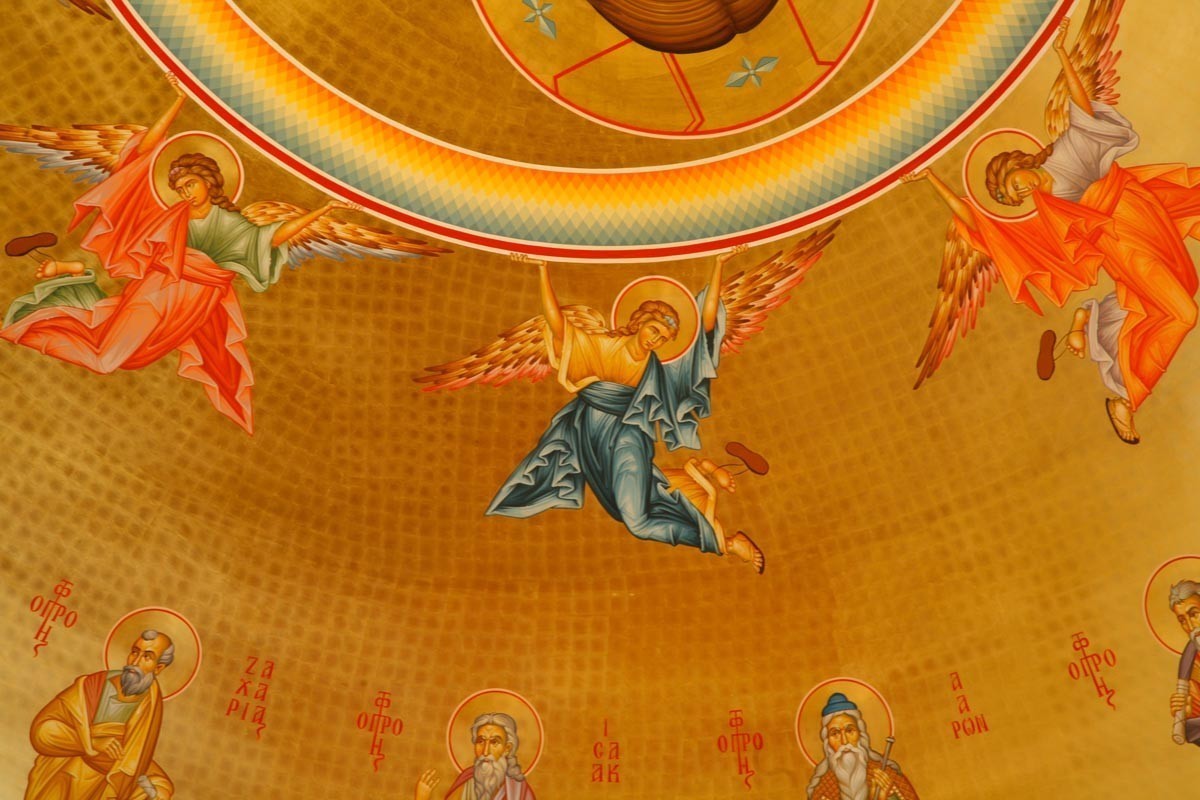
  • Catholic and Eastern Orthodox Churches can be found filled with carved or molten images and/or statues of Jesus Christ and his mother Mary, in various sizes and shapes.
  • Most of these statues or images are placed in the prominent places of the prayer halls of these Christian Churches for venerating and worshipping of these entities. One would also notice that the majority of the attending congregates would kneel, worship, venerate and pray before these images as their reverent rituals and inherited traditions. Many devoted believers would place lighted candles in front of these statues or images before worshipping or paying their homage.
  • These Catholic congregates who venerate Lord Jesus as their God and call Virgin Mary as the “Mother of God”, do form the bulk of the Christians community. It has been so since the inception of the Roman Catholic Church. The Protestants, who separated from the Roman Catholics, nearly ten centuries after the advent of Islam, do not have the statues of Mother Mary in their Churches, although at one time Mary did play a pivotal role.
  • As for the Holy Ghost, the third person of the Holy Trinity, no Christian Church has so far instituted its venerating representation, image or semblance for their Churchgoers.

Under the heading MARY, we find the following information that supports the above argument.

Mary’s exalted position also earned her the titles Mother of God and Coredemptrix, suggesting that she played an active role in the redemption of mankind along with her son. The Mother of God title was applied early in church history, based on the notion that Jesus was fully God as well as human. This was established as a doctrine in the 4th century. In the Eastern churches this doctrine played a major devotional role and became a favorite subject for icon painters. During the Reformation era it was accepted by both Catholic and Protestant scholars, though Mary’s role in Protestant theology has declined markedly since then.[1]

It is clear that for all practical purpose and in reality, when the issue is of worshipping, venerating, deifying and/or idolizing is concerned, it is Mary - the theotokos (Mother of God), and not the Holy Ghost, which has that kind of rank and status. Briefly, in terms of veneration, the idols of Jesus and Mary are treated as deities. The Holy Ghost is not venerated as a deity in the manner that Jesus’ and Mary’s idols were treated. The quoted verse from the Holy Qur?an questions such Divine Rank and Status that have been assigned by the followers of Jesus to him and his mother.

The quoted verse does not speak of the Church developing the enigmatic doctrine of Trinity in the fourth century. It is in fact accepted that the doctrine of Trinity evolved and took its final shape nearly 350 years of CE. Bart D. Ehrman observes that

Christianity in the second and third centuries was in a remarkable state of flux. To be sure, at no point in its history has the religion constituted a monolith. But the diverse manifestations of its first three hundred years - whether in terms of social structures, religious practices, or ideologies - have never been replicated.

Nowhere is this seen more clearly than in the realm of theology. In the second and third centuries there were, of course, Christians who believed in only one God; others, however, claimed that there were two Gods; yet others subscribed to 30, or 365, or more. Some Christians accepted the Hebrew Scriptures as a revelation of the one true God, the sacred possession of all believers; others claimed that the scriptures had been inspired by an evil deity. Some Christians believed that God had created the world and was soon going to redeem it; others said that God neither had created the world nor had ever had any dealings with it. Some Christians believed that Christ was somehow both a man and God; others said that he was a man, but not God; others claimed that he was God but not a man; others insisted that he was a man who had been temporarily inhabited by God. Some Christians believed that Christ’s death had brought about the salvation of the world; others claimed that his death had no bearing on salvation; yet others alleged that he had never even died.[2]

So, in conclusion, there is no point calling the modern-day Trinitarian Christianity as ‘true’ Christianity and all others as ‘false’ since the evolution of this doctrine itself is very late. The early Christianity themselves had bizarre beliefs about their doctrine as well as their Scriptures.

And only God knows best.

References

[1] Compton’s Interactive Encyclopedia (1995), under the heading “Mary”

[2] Bart D. Ehrman, The Orthodox Corruption Of Scripture: The Effect Of Early Christological Controversies On The Text Of The New Testament, 1993, Oxford University Press, London & New York, p. 3

One Response to “Does the Qur’an Say that Mary Was Worshipped As Part of The Trinity?”

  1. shadowofears said on 20 December 2006:

    The obvious conclusion is that for all practical purpose and in reality, when the issue is of Worshipping, Venerating, Deifying and/or Idolizing, it is Mary - the “Mother of God” and not the Holy Ghost has that kind of rank and status. Briefly, the historical figures of Jesus and Mary are venerated as Deities. The Holy Ghost is not venerated as a Deity.

    The quoted verse from the Holy Qur’an questions such Divine Ranks and Status that have been assigned by the followers of Jesus to him and his mother. The verse does not speak of the Church developed enigmatic Doctrine of Trinity.

    Theologically speaking, the concept of Holy Ghost as ‘Filioque’(“a double procession”) was added to the Original Doctrine much later. As taught by the Greek theologians and advocated by St. Augustine, it simply makes the Holy Ghost a “go-between” communications or things that proceed from the Father and is received by an individual via Jesus Christ. One may argue that since the Holy Ghost emanates from God the Father, it is also God. In reality, this would only be possible if there was a “total emanation” (100% transfer). If that be the case, then the Primary Source has either annihilated Himself (Itself) or has produced a Clone. God the Father still exists and Christians with their Trinitarian Beliefs yet claim God is One.

    During his ministry, Jesus Christ had taught in very explicit language to worship the “Father in Heaven” (see Matthew 6:5-13). Jesus never ever taught his followers to make images of him and/or his mother and then venerate either of them. In this regards, the Protestants consider themselves a step ahead and reformed than their counterparts.

    The quoted verse from the Holy Qur’an is a direct challenge to those who make the graven images of Jesus and Mother Mary. The Almighty God in the Second of the Ten Commandments also warns mankind against making of graven images and worshipping them. (See Exodus 20:4).

Leave a Reply

You must be logged in to post a comment.