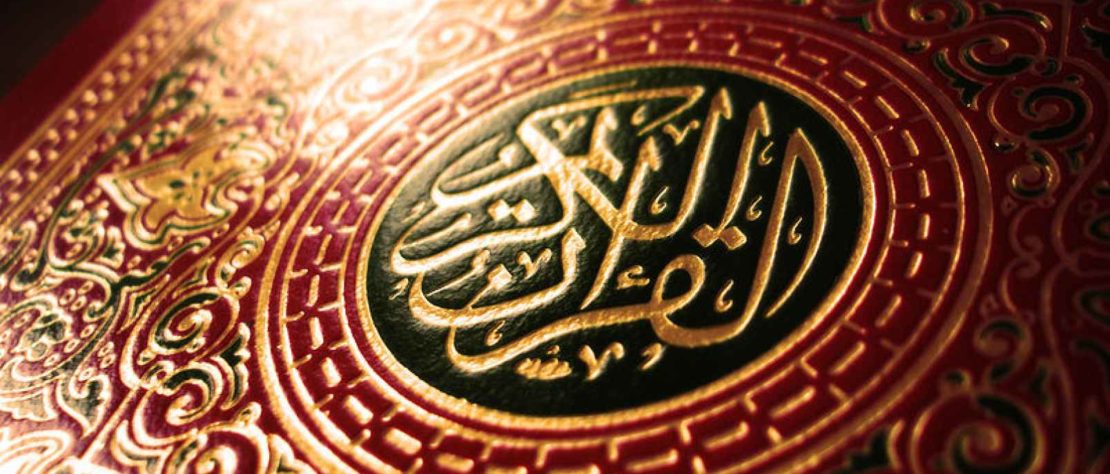
Просмотрение принятое от Abu Ammaar Yasir Qadhi, Введение к наукам Qur' aan (Опубликовывать al-Hidaayah и Распределение, 1999). Первая работа Теодор Noeldeke, очень известным немецким Orientalist. Он озаглавил его des Qorans Geschichte, или «историю Qur'». Работа была написана with the help of 3 другое немецкое Orientalists: Pretzl, Schwally и Bergstraesser. Оно было опубликовано over a period of 3 декады, в 3 томах. Первый том был опубликован over a period of 3 декады, в 3 томах. Первый том был опубликован в 1909, и последнем в 1938. Оно выиграло национальные пожалования от академии Paris надписей, и нарисовало большой acclaim от Orientalists во всем мире. Von Denfer имеет сводку, но superb, просмотрение работы, которая закавычена в своей полноте: «История `Qur'' произвела 4 немецкими orientalists, делами в 3 частях с `начало Qur'', `собрание Qur'', и `история Qur' anic текста'. Вполне книга естественно отражает по-разному подходы и типы scholarship различных авторов. Смещение Noeldeke против Islaam можно все еще ясно discerned, хотя он более поздно отречьлся от некоторых из его взглядов относительно истории Qur'. GLAVNое вещество первого тома будет своей второй частью «на началах различных частей Qur'». Здесь, on the basis of работы Noeldeke более предыдущие, soorahs были аранжированы в 4 периодах, 3 Makkan и одном Madinan, зависящ тяжело на мусульманских источниках, специально на Itqaan Suyootee и Tabari. Из-за этого, представленным материалом будет, отдельно от обычных biased комментариев, хороший профиль классических мусульманских сочинительств на вопросе. Incidentally, Pickthall (well-known Qur' переводчик), положенное тяжело на этом для его замечает на хронологии в его переводе. Будет окончательное обсуждение на откровении включенном в aan Qur' обсуженное on the basis of различное ahadith и другие источники.
Второй том, dealing with собрание, почти вполне основан на мусульманских источниках (опять Itqaan преобладает) и представляет штилевому обсуждению традиции' vis-୶is `управляя другие рапорты о собрании Qur'. Schwally, after presenting the material and his reflection on it, comes to the conclusion very close to classical Muslim views, namely that “the shape of the Qur’an, as we have it now, was completed two or three years after the death of Muhammad, since the ‘Uthmanic edition is only a copy of Hafsa’s piece, the editorial work of which had been completed under Aboo Bakr, or at the latest under Umar. This editorial work however probably only concerned the compositions of the surat and their arrangement. As far as the various pieces of revelation are concerned, we may be confident that their text has been generally transmitted exactly as it was found in the Prophet’s legacy.” Volume three is mostly concerned with the written text of the Qur’an and the various readings. It is once more a sober presentation of information derived basically from Muslim sources. Bergstraesser has dealt mainly with the written form of the ‘Uthmanic Qu’ran’, the variant readings, as contained in the masaahif of Ibn Mas’ood and Ubay. He then introduces the historical development of the qira’aat. Pretzl presents the various readings, emphasising the famous “seven readings”, describes the Muslim literature on the qira’at and finally deals very briefly with palaeography and decorative designs of old Qur’anic manuscripts. As in volume two, the main sources are classical Muslim authors, especially as-Suyootee, al-Mabanee, al-Jazaree and various writers on the qira’at. Until today, Noeldeke/Schwally is the most comprehensive-if not the sole serious attempt by Orientalists to deal with the Qur’an - at least in a descriptive manner. For this is what the later authors - not so much Noeldeke had in view: to collect the available material on the subject and to present it. While some of the authors’ comments and conclusions would not be welcomed by Muslims, the vast area that has been covered and the presentation based on the classical Muslim literature on the topic are of merit that has to be acknowledged. Especially in the latter two volumes, there is surprisingly little that Muslims might find derogatory in style, and indeed the basic presentation is not unlike classical Muslim literature on the subject.”
Subscribe
Subscribe Articles With
Bloglines, Google Reader, My MSN, Netvibes, Newsburst
Newsgator, Odeo, Pluck, Podnova, Rojo, My Yahoo!, Desktop Reader
Leave a Reply
You must be logged in to post a comment.