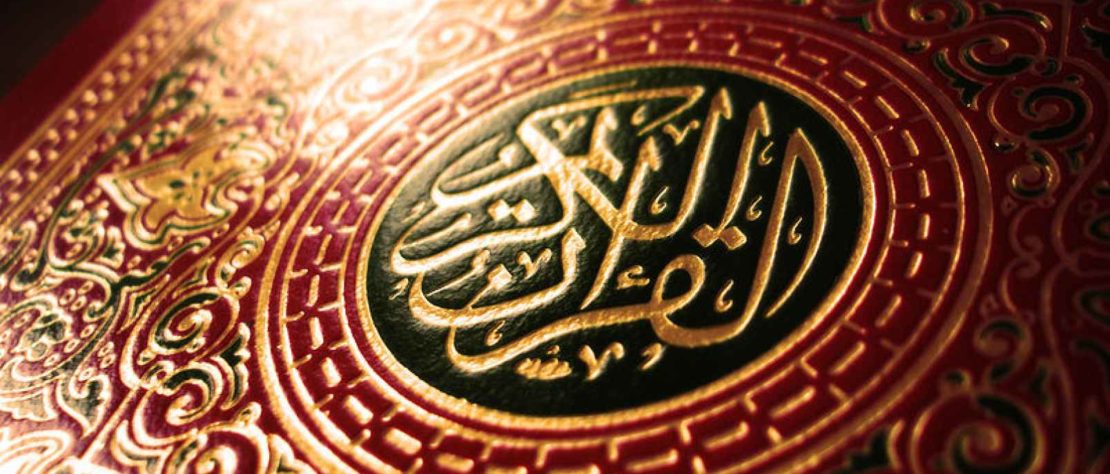
BUCHBESPRECHUNG durch Prof Y. Dutton, Lektor in der Abteilung der islamischen Studien, Universität von Edinburgh, genommen vom Journal der islamischen Studien, Mai 2000 Ausgabe. (Oxford Mitte für islamische Studien, 2000) Die Ursprung des Koran: Klassische Versuche auf heiligem Buch des Islams Dieses Buch, durch die ziemlich neblige Persönlichkeit von „Ibn Warraq“ (weder werden sein voller Name noch seine Institutionsverbindung, wenn irgendwelche, gegeben) überall, besteht aus dreizehn vorher erschienenen Versuchen auf der Geschichte und die Natur des Qur' anic Text, zwölf redigiert von ihnen datierend vom Hälftejahrhundert zwischen 1890 und 1940 und dreizehnte von so vor kurzem wie 1985 nur datieren. Das Buch wird in vier Teile geteilt. Der Teil man enthält eine Einleitung durch den Herausgeber, der neues zusammenfaßt, meistens „Revisionist“, westliche Gelehrsamkeit auf den Ursprung des Islams und seine schriftliche Tradition, und auch ein allgemeiner Versuch, eher großartig und, man muß sagen, eher nonsensically beschrieben im Klappentexte als „die erste wirklich wissenschaftliche Studie des Qur'; durch Theodor Noldeke. Teil zwei, „die Ansammlung und die Varianten des Koran; besteht aus Versuchen durch Leone Caetani, Alphonse Mingana (zwei), Arthur Jeffrey (vier) und David Margoliouth, auf dem allgemeinen Thema von, wie der anwesende Text kam hergestellt zu werden. Teil drei, „die Quellen des Koran“; Geschenke drei lange Versuche durch Abraham Geiger, W. Str. Clair-Tisdall und Charles Torrey, die das angenommene jüdische erforschen, christlich, und Zoroastrian Quellen des Qur'. Teil vier, „moderne Textkritiken des Koran“; besteht aus einem einzelnen Versuch durch Andrew Rippin, der einzige zeitgenössische Gelehrte, der in der Ansammlung dargestellt wird, die die Methodenlehren von John Wansbrough und sein Gebrauch von der literarischen Analyse, die moslemische Standarddatierung der frühesten islamischen Texte zu fragen darstellt. Das Problem mit dieser Ansammlung ist seine Lagebestimmung.
Der Herausgeber behauptet, nur mit „jenen Wahrheiten betroffen zu werden, die durch einen Prozeß der rationalen Anfrage, durch wissenschaftliche Prüfung“ (9), um erbracht werden, Arthur Jeffreys in den Wörtern, eine „kritische Untersuchung des Textes des Qu' anscheinend zu erzielen laufen ließen“ (9). However, what we see exhibited by the choice of essays is in fact quite different. Ibn Warraq himself rejects most, if not all, Muslim scholarship on the issue, while at the same time seeming to accept without question anything produced by the “revisionist” wing of modern Western scholarship, neither of which positions would seem tenable for one seeking to produce by “rational enquiry”. Moreover, he seems to have ignored even that amount of criticism of the “revisionist” position that exists in his own chosen essays: thus, for example, in his Introduction he praises the work of Crone and Cook, whose book Hagarism he describes as “fascinating” (33) and “intellectually exhilarating” (29), without seeming to be aware of Rippin’s caveat elsewhere in the collection that “although they (Crone and Cook) successfully draw attention to the problems involved in the study of Islam, they have not been able to get beyond the limitations in the sources, for they are all of questionable historical authenticity and, more importantly, all are treatises based in polemic” (352). In other words, the non-Islamic sources are no more free from potential bias than the Muslim ones. Indeed, the words that best seem to describe Ibn Warraq’s attitude are those that he quotes from Rippin, who refers to those who approach Islam “with less than academic candour” (10), and Crone, who warns us that “the entire tradition is tendentious; which, although intended to refer to Muslim historiography, applies as much, if not more so, to modern revisionist scholarship. But not only is Ibn Warraq’s own position “based on polemic” and an uncritical acceptance of certain sources (in this case, modern revisionist scholarship), but so too are the highly “Christianised” critiques - or attempts at critique - of, for example, Mingana and St Clair-Tisdall, for whom nothing is ultimately acceptable unless it accords with Christian scripture (e.g. 79, 235, 259), and for whom, it seems, “the opinions of Arab authors?are too worthless to be quoted” (95). Similar assumptions of the primacy of Judaism and/or Christianity also seem to underlie many if not most of the other essays in the book. However, what in fact for the majority of these essays show is not a Jewish, Christian, or even Zoroastrian, source for some Qur’anic narrative or narratives (one is reminded of how the unbelievers in the Qur’anic narrative always reject the Qur’an as “tales of the ancients”), but rather the existence of parallels: any conclusions about direct borrowing in a derivatory sense are, and can only remain, speculation. Nevertheless, there is some benefit to be gained from this book. This reviewer in particular found the essays by Jeffrey and Margoliouth on the variants of the Qu’ran (Chapter 6 and 10 respectively) to be of more than passing interest in that they collect together many useful references and suggest many lines for future research. But otherwise, this book is lacking in interest for the serious scholar of “the origins of the Koran”; for the simple reason that it seems to miss, or bypass, the essential issue of the nature of revelation itself and the claims made about it. Put simply, either the Prophet was telling the truth or he wasn’t. Again and again the Qur’an emphasises that this is not the speech of a mere human but rather “a sending down from the Lord of all the worlds”. Now, either the Prophet was correct in his accepting and saying this or he was not; and if he was not, then either he was inadvertently mistaken or he was an outright impostor. To countenance his being an impostor does not, quite frankly, tally with everything we know of the excellence of his human behaviour, nor does it tally with the love that others had for him and the spirit of self-sacrifice expressed so clearly by all who took his path. Nor can we accept that he was mistaken: it is recorded that when he first experienced the phenomenon of revelation, he was afraid that he might be going mad. His wife, Khadija, however, had the decisive argument on that point: it did not make sense that someone who so selflessly looked after the sick and the poor, helped those in need, and treated his guests and neighbours well-in short, someone who was always so outgoing and helpful to others-should be mad. Madness and altruism do not go together. Rather, it is outward social action that indicates a deep sanity in the human being. Either one accepts this argument of Khadija, along with the testimony of tradition to the Prophet’s honesty and trustworthiness both before and after the onset of his revelationary experiences, bolstered by the evidence of the unconditional love that he engendered in those around him-which is hardly the effect of a liar and a cheat-or one does not. As for his being mistaken, either one rejects the testimony on his own tongue that the Qu’ran was revealed “on his heart” and was then expressed outwardly by his own speech but was nevertheless the “sending down of the Lord of all the worlds” and not of his own volition, or one does not. And either one accepts Khadija’s argument that someone with such praiseworthy outward behaviour-the basic mark of sanity-could not be the object of demonic possession but rather was in full possession of his faculties, or one does not. If one takes the Muslim position and accepts these arguments-or rather we should say positions, since there is no argument about these points but rather a recognition and acceptance of them-then the nature of revelation is defined by what actually happened, rather than by any expectations people might have about what they think should have happened. One can impose no prior expectations on this material: rather, the nature of the revelation is at it was, variants and all. And with respect to this latter point, we should remember that Muslim scholars have never been embarrassed by the presence of variants, not even the Shadhdh, or non-standard ones: rather, they have accepted their existence, and the fact that people used them at the time they did, while at the same recognising that there was a need to simplify and systematise matters for latter generations to prevent an unacceptable proliferation, thus leading first to “Uthman’s decision to restrict the written form of the Qur’an so that, as the reports put it, “the community would not become divided about their scripture as had the Jews and Christians”, and, secondly, to the subsequent systematisation of the various possibilities into the accepted systems of the Seven, Ten, or even Fourteen, Readers. From this perspective, the contents of the present book seem little more than a polemical attempt to debunk the Qur’an and, by extension, Islam. As St Clair-Tisdall put it in his essay on the supposed Jewish, Christian and Zoroastrian sources of the Qur’an: “If we can trace the teaching of the Koran, or any part of it, to an earthly source, or to human systems existing previous to the Prophet’s age, then Islam at once falls to the ground” (232; cf.227, where William Muir, in his Introduction to the same piece, repeats the same claim). The rest of the book is not, as we have suggested above, in a very different mode. Rather, it seems to me that one has to accept a reality of revelation, experienced and mediated not only by the Prophet Muhammad but also by many, many Prophets and Messengers before him. From this perspective, one would indeed expect a great deal of similarity in content between previous divinely inspired messages. But it remains true that, of these messages, that which we know today as the Qu’ran is our best and most complete example and therefore the best starting point for anyone who wants to better understand this phenomenon.
Redigiert durch IBN WARRAQ. Amherst, NY: Prometheus Bücher. 1998.
Pp. 411. Preis HB $32.95. 1-57392-198-X.
Subscribe
Subscribe Articles With
Bloglines, Google Reader, My MSN, Netvibes, Newsburst
Newsgator, Odeo, Pluck, Podnova, Rojo, My Yahoo!, Desktop Reader
By Month
Most Popular Articles
- The Authentic Gospel of Jesus: Evidence That Demands Christians Rethink Their Faith
- The Consensus on Homosexuality and The Illiteracy of Christian Polemicists
- Missionary Activity in Kosovo and the Causes of Muslim Conversions
- Learning Christianity in five minutes
- Response To "Muhammad as Al-Amin (the Trustworthy): How His Enemies Really Viewed Him" And The Christian Missionaries
- An Eye-Opening Biblical Narration
- Another Rational Approach to the Prophethood of Muhammad (P)
apostate said on 4 August 2007:
While I agree with many of your criticisms here, the following statement is your purely subjective and personal opinion:
“But it remains true that, of these messages, that which we know today as the Qu’ran is our best and most complete example and therefore the best starting point for anyone who wants to better understand this phenomenon.”
There are many other revelations that people prefer to the Qu’ran and consider superior to it. There’s no reason why the Qu’ran should be considered the best, most complete or “final” revelation apart from personal preference.