
If you're new here, you may want to get regular updates via Se siete nuovi qui, potrebbe essere utile per ottenere gli aggiornamenti regolari via RSS feed RSS feed . . Thank you for visiting! Grazie per la visita!
Mohd Elfie Nieshaem Juferi Mohd Juferi Nieshaem Elfie
When Muslims confront the Christian missionaries with the etymological evidence that the word Allah is indeed related to the word Elohim , the missionaries are very quick to point out that Quando i musulmani affrontano i missionari cristiani, con l'evidenza etimologica che la parola Allah è infatti legato alla parola Elohim, i missionari sono molto veloci a sottolineare che

Yhwh Yhwh
is the “Divine Name” for The Deity that they worship and that since Muslims are not taught about this “Divine Name” of God, it therefore follows that Muslims are calling upon God wrongly. è il "nome divino" per la divinità che essi adorano e che, poiché i musulmani non sono insegnate su questo "Nome Divino" di Dio, ne consegue quindi che i musulmani sono invocare Dio a torto. This is not a new argument from the missionary. Questo non è un argomento nuovo da missionario. When the Prophet Quando il Profeta Muhammad Muhammad (P) was in Madinah, the Jews of Madinah offered a similar objection, claiming that Muslims should not refer to The Deity by merely calling Him Allah. (P) è stato di Medina, gli ebrei di Medina offerto una simile obiezione, sostenendo che i musulmani non devono fare riferimento alla Divinità, semplicemente chiamandolo Allah. Thus, the following Qur'anic verse was revealed to reply to the objection: Così, il seguente versetto del Corano è stato rivelato per rispondere alla obiezione:
“Say: Call upon “Allah or call upon “Rahman”; By whatever name ye call upon Him (it is well): for to Him belong the most beautiful names.” (Qur'an, 17:110) "Di ': invitare" Allah o invitare "Rahman"; Con qualunque nome voi chiamate su di lui (è bene): per a Lui appartengono i nomi più belli. "(Corano, 17:110)
We should also note the following observations regarding the claim: Dobbiamo anche notare le seguenti osservazioni riguardo alla somma:
1 – First of all, the very first word in Genesis 1:1 is “Elohim”, not 'Yahweh'. 1 - Innanzitutto, la prima parola in Genesi 1:1 è "Elohim", non 'il Signore'. The word YHWH only started appearing in Genesis 2:4, and even then, it was almost always accompanied with the word “Elohim”, as in “Yahweh Elohim”. La parola YHWH solo cominciato a farsi vedere in Genesi 2:4, e anche allora, era quasi sempre accompagnato con la parola "Elohim", come in "Yahweh Elohim".
2 – According to The New Strong's Exhausive Concordance of the 2 - Secondo il The Strong's Exhausive Concordanza del Nuovo Bible Bibbia , the word Yahweh is “…the Jewish national name of God”[1]. , La parola del Signore è "... la nazionale nome ebraico di Dio" [1]. In short, this is the name that only the Jews themselves use. In breve, questo è il nome che solo gli ebrei stessi usano. Compare this with the entry for Elohim, in the same reference: “…specially used of the supreme God”[2] Confronta questo con l'entrata di Elohim, nel riferimento stesso: "... usato specialmente del Dio supremo" [2]
3 – The final point is that according to the Christian belief itself, the name Yahweh is only used for the old covenant context, and not valid for Christians, who believe that they are in a new covenant. 3 - Il punto finale è che, secondo la fede cristiana stessa, il nome del Signore viene utilizzata solo per il contesto di alleanza, e non valido per i cristiani, che credono di essere in una nuova alleanza. This is evident when nowhere in the New Testament does the word Yahweh appear. Ciò è evidente quando in nessuna parte del Nuovo Testamento non la parola del Signore apparire. As John Gilchrist says: Come John Gilchrist ha detto:
… While the name Yahweh appears throughout the Old Testament in the original Hebrew text, it appears nowhere in the books of the New Testament, not even in the original Greek texts. ... Mentre il nome del Signore appare in tutto l'Antico Testamento nel testo originale ebraico, appare da nessuna parte nei libri del Nuovo Testamento, nemmeno nei testi originali greci. In 0ld Testament times Yahweh was the name of the covenant God of Israel (Exodus 3.15), but the Lord has never used this name in a new covenant context. In 0ld tempi dell'Antico Testamento Yahweh era il nome del patto di Dio di Israele (Esodo 3.15), ma il Signore non ha mai usato questo nome in un contesto di nuova alleanza. The coming of L'avvento del Jesus Gesù Christ brought about a major change in God's relationship with his people. Cristo ha portato un cambiamento importante nel rapporto di Dio con il suo popolo. Now he is projected solely as the Father of all true believers, Jew and Gentile alike, without any distinction being made between them (Romans 10.12). Ora è proiettata esclusivamente come il Padre di tutti i veri credenti, Ebreo e Gentile allo stesso modo, senza alcuna distinzione tra di loro (Romani 10,12). The name Yahweh was used solely in an old covenant context and the New Testament plainly states that the old covenant has become “obsolete” (Hebrews 8.13) and that it has been entirely “abolished” (Hebrews 10.9). Il nome di Jahvè è stato utilizzato unicamente in un contesto di alleanza e il Nuovo Testamento afferma chiaramente che l'alleanza è diventato "obsoleto" (Ebrei 8,13), e che è stato interamente "abolita" (Ebrei 10,9). For this reason one never finds the name Yahweh in the New Testament – it was relevant only to the people of Israel in old covenant times….The New Testament deliberately avoids the use of the name Yahweh and the only possible translation of theos into Arabic is Allah [3] Per questo motivo uno non trova mai il nome di Jahvè nel Nuovo Testamento - è stato rilevante soltanto per il popolo d'Israele in tempi alleanza .... Il Nuovo Testamento evita espressamente di utilizzare il nome del Signore e l'unica possibile traduzione in arabo di theos è Allah [3]
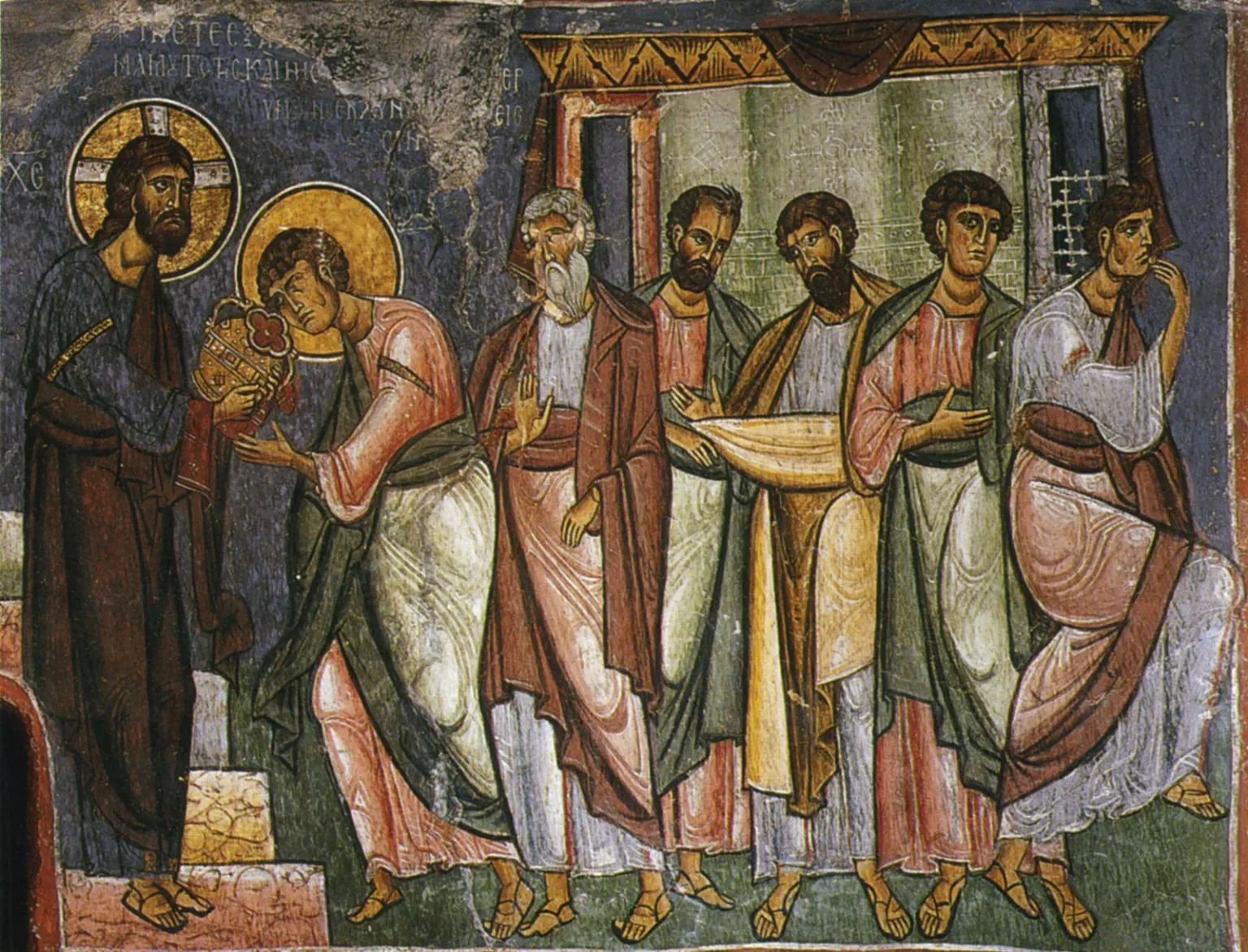
On a side note, we refer to Mark 15:34 where Jesus(P) is reported to have cried out in Aramaic: Su un lato nota, si fa riferimento a Marco 15:34, dove è riportato Gesù (P) di avere gridato in aramaico:
ELOI, ELOI, LAMA SABACHTHANI? Eloì, Eloì, lemà sabactàni?
Which is translated into English as: Qual è tradotto in inglese come:
My God, My God, why hast thou forsaken me? Dio mio, Dio mio, perché mi hai abbandonato?
According to The New Strong's Exhausive Concordance of the Bible , the defination of eloi is as follows: Secondo il New Strong Exhausive Concordanza della Bibbia, la Nozione di "Eloi è il seguente:
?eloi [ELWI] of Aramaic origin, 0426 with pronominal stuff.; nm AV – Eloi 2; 2; Eloi = “my-God”; 1) Aramaic for the phrase “my-God”[4] ? Eloi [ELWI] di origine aramaica, 0426 con roba pronominali.; Nm AV - Eloi 2; 2; Eloi = "my-Dio"; 1) aramaico per la frase "il-mio-Dio" [4]
If the claim is that Yahweh is the so-called “true” name of God, then why instead of calling out Se il credito è che il Signore è il cosiddetto "vero nome di Dio, allora perché invece di chiamare fuori
ELOI, ELOI, LAMA SABACHTHANI? Eloì, Eloì, lemà sabactàni?
Jesus(P) could have instead just cried out Gesù (P), avrebbe potuto invece appena gridato
YAHWEH, YAHWEH, LAMA SABACHTHANI? Signore, il Signore, lemà sabactàni?
This shows that the claim that Yahweh is the “only true name” for God certanly does not hold water. Ciò dimostra che l'affermazione che il Signore è il "solo vero nome" di Dio certanly non regge. Jesus (P) did refer to God as “ELOI”, or “ELI” (according to Matthew 27:46). Gesù (P) ha fatto riferimento a Dio come "ELOI", o "ELI" (secondo Matteo 27:46). So are we expected to believe that Jesus (P) was ignorant of this “true name” of God when he called upon Him as “ELI” (which root word is related to the root of the Arabic, ALLAH) instead of Yahweh, and Christians who only exist 2000 years later are “aware” of the “true name” of God? Così sono ci aspettavamo a credere che Gesù (P) non conosceva questo "vero nome" di Dio, quando lo aveva invocato come "Eli" (che parola radice è legato alla radice del arabo, Allah) invece di Yahweh, e I cristiani che esistono solo 2000 anni più tardi sono "consapevoli" del "vero nome" di Dio? We think not! Noi pensiamo di no!
It seems that the missionaries have created more problems than they think they had solved. Sembra che i missionari hanno creato più problemi di quelli che pensano di aver risolto. And certainly, only God knows best! E certamente, solo Dio lo sa meglio!
One Response for Una risposta per "Is 'Yahweh' the "Divine Name" For God?" "E 'il Signore' il" nome divino "Per Dio?"
You must be Devi essere logged in registrato nel to post a comment. Per inviare un commento.
I think we also ought to realise that the Jews regarded “YHWH” as sacred. Penso che anche noi dobbiamo renderci conto che gli ebrei considerati "YHWH", come sacro. The mere pronouncement of God's divine name was considered taboo. Il pronunciamento semplice nome divino di Dio era considerato tabù. The Jews treated 'God's Name' with utter respect, hence God was not addressed in that manner. Gli ebrei trattati 'Nome di Dio' rispetto totale, quindi Dio non è stata affrontata in questo modo.