If you're new here, you may want to get regular updates via如果你是新這裡,你可能想通過定期更新 RSS feed RSS提要 . 。 Thank you for visiting!感謝您訪問!
This is with reference to Christoph Heger's這是參照克里斯托夫黑格爾的 exegesis註釋 on Sura' 4:125.在蘇拉'4:125。 The correct rendering of Qur'an 4:125 is:正確的渲染古蘭經 4:125是:
“And who is there that has a fairer religion than he who submits his will to God being a good-doer, and who follows the creed of Abraham, a man of pure faith? “誰是那裡有一個更加公平的宗教比他誰提交了上帝的意志是一個良好的善人,誰遵循的信條亞伯拉罕,一個人的純粹的信仰? AND GOD TOOK ABRAHAM FOR A FRIEND.” (Arberry's translation).亞伯拉罕與上帝把一個朋友。“(阿伯里的翻譯)。
Christoph Heger writes:克里斯托夫黑格爾寫道:
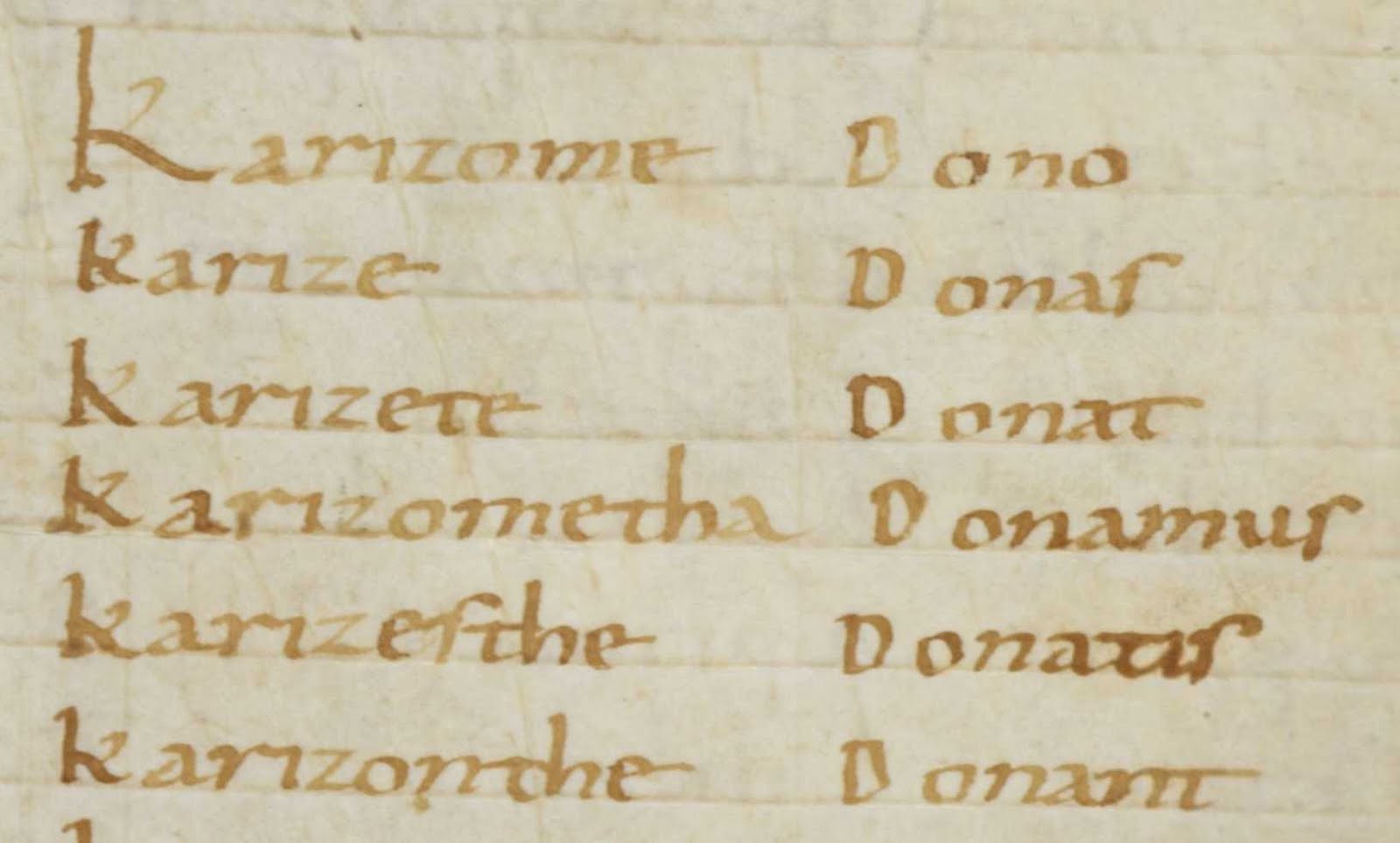
In surah 4:125 there are both grammatical and exegetical reasons to assume that the word “Allah” better had not been substituted for a previous rasm “'lh” or ? 在surah 4:125有兩種語法,訓詁的理由認為這個詞“阿拉”沒有更好的替代先前德賴斯姆“'LH的”或? with an Alif MaqSuwrah as second radical, which in those old Hijazi Qur'ans is not unusual? 與阿利夫MaqSuwrah作為第二激進,這在那些老赫加齊先生古蘭經是不尋常? “'lyh”, meaning “ilaah” or “aalaah” (the Syriac word for the Christian God, which became “Allah” in the Arabic language). “'lyh”,意思是“ilaah”或“aalaah”(敘利亞文字基督教神,成為“阿拉”在阿拉伯語)。
This entire statement is 100 percent false and has been cunningly wrapped in the classical deception outfit, which has become the hallmark of the likes of Christoph Heger and Ibn Warraq, etc., as will be demonstrated in the following.這全是百分之百虛假陳述,並已狡猾裹在古典欺騙裝備,已經成為標誌的喜歡的克里斯托夫黑格爾和伊本Warraq等為將體現在以下。
DECEPTION 1: 誘騙1:
“… there are both grammatical and exegetical reasons to assume…” “...有兩個原因,語法,訓詁承擔 ...”
COMMENT: 意見:
There is not a SINGLE “GRAMMATICAL” and/or “EXEGETICAL” reason to enable one to substitute “Ilah” for the Qur'anic “Allah” in the part of the verse 4:125 under consideration.沒有一個單一的“語法”和/或“訓詁”的原因,使一,以“伊拉”為古蘭經“真主”的部分詩句 4:125審議。
FROM THE EXEGETICAL VIEWPOINT, the theme here is God taking Abraham as His friend – not man taking the “god of Abraham” as his “ideal.”從訓詁的角度看,這裡的主題是上帝以亞伯拉罕在他的朋友 - 沒有人以“神的亞伯拉罕”視為自己的“理想”。
This theme expressed in this Medinan verse (revealed in year 2 according to Bell), which was well-known to its addressees, has been used by the Qur'an to justify the faith of Abraham to which it wants to return.這一主題表達了這一 Medinan詩(顯示在第2年按貝爾),這是眾所周知的,它的對象,一直使用的古蘭經,證明亞伯拉罕的信仰了它想要的回報。
FROM THE GRAMMATICAL VIEWPOINT, the final member of the verse 4:125 constitutes an independent sentence (see the “Waqf-e-Mutlaq” symbol immediately after “Han?” in the Arabic text).從語法的角度看,最後成員詩 4:125構成一個獨立的句子(見“教產,電子穆特拉克馬”符號後,立即“漢?”在阿拉伯文文本)。 It is not however without an intimate relationship with the first part of the verse to which it is coordinated.但它不是沒有親密關係的第一部分的詩句,它是協調的。 The rhyme is maintained and the subject changes from the 3rd person to the 3rd person (ie, “he” to “All?quot;).韻是保持和主題的變化從第三人向第三人(即“他”到“?quot;)。 This change of pronoun actually highlights the significance of the Creed of Abraham since God Himself was He (as per this final portion of 4:125), who took this Abraham for a friend.這種變化突出的代名詞,其實意義的信條亞伯拉罕的上帝,因為是他(按這最後一部分的4:125),誰參加了本亞伯拉罕為朋友。
This emphasis on the purity of the Creed of Abraham, by this shift in the pronoun, further strengthens the theme which the Qur'?employs in this verse (as stated above in the “exegetical viewpoint.”)這強調的純度亞伯拉罕的信條,在這個轉變的代名詞,進一步加強了古蘭經的主題就是'?員工在這節經文(如上述的“訓詁的觀點。”)
DECEPTION 2: 誘騙2:
“… for a PREVIOUS rasm “'lh” or… “'lyh”, meaning “ilaah” or “aalaah” (the Syriac word for the Christian God, which became “Allah” in the Arabic language).” “...在上一個德賴斯姆”'LH的“或...”'lyh“,意思是”ilaah“或”aalaah“(敘利亞文字基督教神,成為”阿拉“在阿拉伯語)。”
COMMENT: 意見:
The use of the word “PREVIOUS” in the above is sheer deception.使用這個詞的“上一頁”在上面,完全是欺騙。
There are NO variant readings, of ANY word, of the verse 4:125.有變無讀數,任何一句話,4:125的詩句。 Therefore, there is nothing concrete to suggest that the PREVIOUS rasm of the word All?in the verse 4:125 were ANY of the terms mentioned in the above quote.因此,沒有什麼具體的建議,前德賴斯姆這個詞呢?在詩 4:125的任何條款提及的上述報價。
The above is therefore undeniably nothing other than an entirely baseless speculation.因此,無可否認上述無非是完全沒有根據的猜測。
Furthermore, `LYH does not (as claimed by the above quote) mean: “ilaah” or “aalaah,” the Syriac word for the Christian God.此外,`LYH不(以上所稱的報價)是指:“ilaah”或“aalaah,”敘利亞文字基督教的神。
According to ar-R?'s “Maf?h”[1], `LYH means: “to be high,” “to be veiled,” which, according to the Basran grammarians, was the VERBAL NOUN of “LAH.” Further, there is no morphological and conceptual relation between the Arabic Ilah — which according to A. Jeffery[2] is an Old Semitic Form — and the Syriac Al?.據氬 - R的?的“Maf的?h”的[1],`LYH指:“要高”,“要含蓄”的,根據 Basran語法學家,是動名詞的“啦。”此外,沒有任何形態和概念之間關係的阿拉伯文伊拉 - 它根據 A.杰弗裡 [2]是一個老猶太人表 - 鋁和敘利亞?。
Thus if the origin of the Arabic All?is to be taken (as the above quote claims) as the Syriac Al?, then the argument, that the previous Rasm of the All?of verse 4:125 was `LH or `LYH (again as claimed by the above quote) has to be forsaken, simply because of Arthur Jeffery's above-stated point[3].因此,如果原產地阿拉伯呢?是要採取(如上報價索賠)的敘利亞文基地?,然後的論點,即以前的德賴斯姆的呢?詩 4:125 LH的是`或`LYH(再度聲稱上述報價)必須拋棄,只是因為阿瑟杰弗裡的上述要求點 [3]。
Christoph Heger continues:克里斯托夫黑格爾寫道:
The main disadvantage of this understanding is that it postulates a change of the grammatical subject, from “who” (as in A, B, C) to “Allah” (as in D), although D is of a construction exactly parallel to C: 其主要的缺點這樣的認識是,它假設一個改變的語法問題,從“誰”(如甲,乙,丙)為“阿拉”(如在D),但D是一個建築完全平行的C :
DECEPTION 3: 誘騙3:
“The MAIN disadvantage of this understanding…” “主要的缺點這樣的認識 ...”
COMMENT: 意見:
Surely, had this been the “MAIN” disadvantage, then Christoph Heger would not have brought shame to his face by not presenting the other disadvantages “of this understanding.”當然,如果這是“主”的缺點,然後克里斯托夫黑格爾也不會帶來恥辱,他的臉上,沒有提出其他缺點“這樣的認識。”
Regarding the “main disadvantage” that since the rhyme of:關於“主要缺點”,自韻的:
[D] wa-ttakhadha ll?研究[D] 樺ttakhadha當地僱員? Ibrah? Ibrah? khal? 卡爾?
(ie, “And God took Abraham for a friend,” Arberry's translation), (即“神了亞伯拉罕的朋友,”阿伯里的翻譯)
is same as:是相同的:
[C] wa-'ttaba`a millata Ibrah? [ç] 樺'ttaba`1 millata Ibrah? Han? 韓?
(ie, “and who follows the creed of Abraham, a man of pure faith,” Arberry's translation), (即“遵循的信條,誰亞伯拉罕,一個純粹的人的信仰,”阿伯里的翻譯)
so to fancy that this mere similarly of the rhymes of [C] and [D] should justify:所謂幻想,這僅僅是同樣的押韻的[C]和研究[D]應證明:
(i) the substitution of `lh or `lyh for All? (一)替代的`或`lyh LH的所有? (which, BTW, if done, will not be equivalent to the Syriac Al?, as shown above, and thus would not imply what Christoph Heger's desired in the first place, of: “god of Abraham,” in the Syriac Christian sense!) (其中,順便說一句,如果這樣做,將不等同於敘利亞的基地?,如上所示,因而並不意味著什麼克里斯托夫黑格爾的理想擺在首位,對:“上帝的亞伯拉罕,”在敘利亞基督教意義! )
(ii) changing the well-known translation of “Khal?quot; of [D] from “A FRIEND” to “AN IDEAL,” (which, BTW, is not found in any Arabic dictionary!) is clearly totally incorrect and unfounded. (二)改變了著名的翻譯的“卡爾?quot;的研究[D]從”朋友“到”理想,“(其中,順便說一句,沒有發現任何阿拉伯語詞典!)顯然是完全不正確和沒有根據的。
FINAL COMMENTS: 最後的評論:
1- The theme of “God taking Abraham as a friend” is well known, both in the Qur'?as well as in the literature of the Jews and the Christians. 1 - 主題為“神以亞伯拉罕為朋友”是眾所周知的,無論是在古蘭經'?以及文學中的猶太人和基督徒。
Consider:考慮:
And when his Lord tested Abraham with certain words, and he fulfilled them.當他的主測試亞伯拉罕與某些話,他履行他們。 He said, 'Behold, I make you a leader for the people.'他說:'看哪,我給你一個領導者為人民。 [2:124a] (Arberry's translation). [2:124 1](阿伯里的翻譯)。
Abraham – already linked to the Meccan worship by the Qur'an in the third Meccan period (ie, 14:35-7) – is claimed by the Qur'?as the founder of the “millat Ibrah?quot; (religion, as a social body, 2:132-3), whose inheritors, according to the Qur'?亞伯拉罕 - 已經連接到麥加朝拜的古蘭經在第三Meccan期間(即14:35-7) - 是聲稱的古蘭經'?作為創始人的“民族報 Ibrah?quot;(宗教,一個社會團體,2:132-3),其繼承人,根據古蘭經'? are the Muslims (3:68).是穆斯林(3:68)。 In him is for them a “fine model” (“Uswat-un-Hasana”, 60:4) He is a pure monotheist (Han? as in the verse under consideration, and elsewhere, oft-repeating.) And he is the one whom God took as a friend (Khal? 4:125), and who was made by God as the leader for his people (Im? 2:124)他是在為他們“好模式”(“Uswat,聯合國 Hasana”,60:4)他是一個純粹的一神論(漢?在審議中的詩句,和其他地方,經常重複的。)他是上帝把一個人作為朋友(卡爾?4:125),誰是上帝造的領導人為他的人民(進出口?2:124)
It is absolutely clear even to the blind that all these statements are integrally linked to a solid theme of Abraham's prominence in the Qur'?c prophetology.這是絕對清楚甚至失明,所有這些陳述是密不可分的一個堅實的主題亞伯拉罕的突出的古蘭經'?ç prophetology。 On the other hand, there isn't any indication in the Qur'?for the believers to “follow the god of Abraham as an ideal.” This very idea is clearly unfounded in the Qur'?c text.另一方面,沒有任何跡象表明在古蘭經'?的信徒“按照上帝的亞伯拉罕為理想。”這很清楚的想法是毫無根據的古蘭經'?ç文本。
In the在 Bible聖經 , as well, the idea of God taking Abraham as a friend is well known.以及,這個想法以亞伯拉罕的上帝作為一個朋友,是眾所周知的。
Consider:考慮:
Ve ata Yisrael avdi Yaakov asher be khartikha zera AVRAHAM `OHAVI. (Isaiah 41:8; BHS) 味阿拉木圖家園以色列阿夫迪雅各布舍是khartikha策拉亞伯拉罕`OHAVI。(以賽亞書41:8;行李處理系統)
(But thou, Israel, art my servant, Jacob whom I have chosen, the seed of ABRAHAM MY FRIEND) (KJV) (但是你,以色列,是我的僕人,雅各我所揀選,種子亞伯拉罕我的朋友)(新譯)
halo ata Eloheinu horashta et-yoshvei ha'arets hazot milifnei amkha Yisrael vatitna lezera AVRAHAM `OHAVKHA leolam (II Chronicles 20:7; BHS) 暈阿拉木圖Eloheinu horashta等,yoshvei ha'arets hazot milifnei安卡家園以色列vatitna lezera亞伯拉罕`OHAVKHA leolam(歷代志下20時07分,行李處理系統)
(Art not thou our God, who didst drive out the inhabitants of this land before thy people Israel, and gavest it to the seed of ABRAHAM THY FRIEND for ever?) (KJV) (你不是我們的上帝,誰祢趕出去的居民對這塊土地之前,你的民以色列,並賜給給你的朋友亞伯拉罕的後裔,直到永遠?)(新譯)
kai eplhrwqh h grafh h legousa episteusen de abraam tw qew kai elogisqh autw eiv dikaiosunhn kai FILOV QEOU eklhqh. (James 2:23; Nestle-Aland 26th) 啟eplhrwqh Ĥ grafh Ĥ legousa episteusen啟德abraam tw的qew elogisqh autw EIV預側dikaiosunhn偕菲洛夫QEOU eklhqh。(詹姆斯2:23;雀巢,奧蘭26日)
(And the scripture was fulfilled which saith, Abraham believed God, and it was imputed unto him for righteousness: and he was called the FRIEND OF GOD.) (KJV) (而這就應驗經上仰,亞伯拉罕信神,這就算為義對他:他被稱為上帝的朋友。)(新譯)
All this evidence only reinforces the Arberry's rendering of verse 4:125 and exposes the absolute ignorance and extreme deception of the likes of Christoph Heger.所有這些證據只是強化了阿伯里筆下的詩 4:125和暴露了絕對的無知和極端欺騙了喜歡的克里斯托夫黑格爾。
2- Can the word Khal?of 4:125 be rendered as: “an ideal”? 2 - 卡爾能否字?的4:125呈現為:“一個理想的”? Certainly not!當然不是!
Here are the various interpretations of the Arabic term Khal?as recorded by Edward William Lane[4]:這裡是各種解釋的阿拉伯文長期卡爾?錄得愛德華威廉巷[4]:
All these interpretations are self-evident exposures of Christoph Heger's total ignorance of the Arabic language and his arrogant attempts of altering the Qur'?c text despite his ignorance.所有這些解釋是不言自明的暴露的克里斯托夫黑格爾的完全無知的阿拉伯語和他的狂妄企圖改變古蘭經'?ç文字,儘管他的無知。
Notes & References 註釋與參考資料
[1] Vol. [1]卷。 I, pp.餘頁。 81-4 81-4
[2] “Foreign Vocabulary…” [2]“外國詞彙 ...”
[3] Ibid., p. [3]同上。山口 66 66
[4] Arabic-English Lexicon (London: Willians & Norgate, 1865), book 1, part 2, p. [4] 阿拉伯語,英語詞彙 (倫敦:威利昂&諾蓋特,1865年),第一冊,第2部分,第 781, col. 781山口。 1一