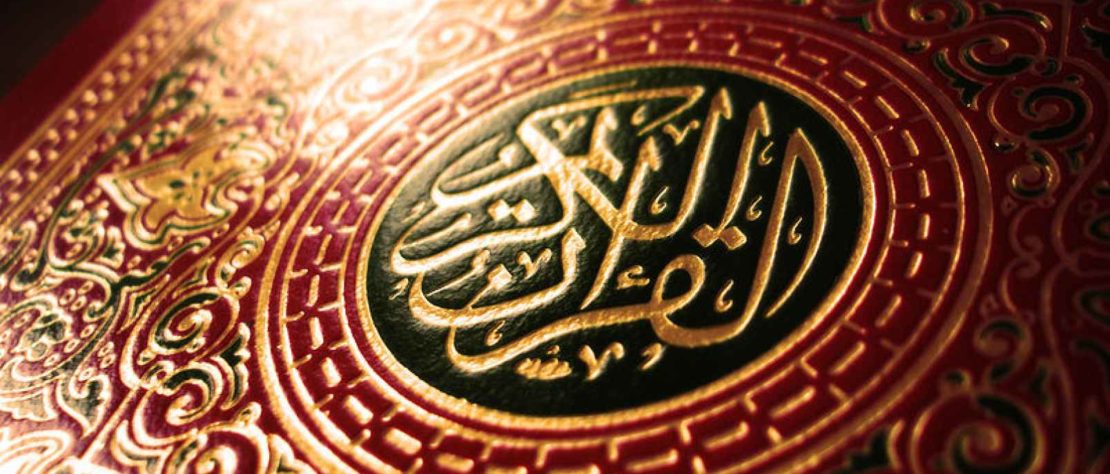
Der erste Vers des Qur' anic Sura 25 kann wie transkribiert werden: „tabaraka lladh? azzala l-FURQ? Ein `Al? abdihi Liyak? i-l-'? m? NADH? ? In einem Artikel, der zuerst auf seiner Webseite [1] erschien und wurde nachher Ibn Warraqs in der Ansammlung Artikeln auf dem Qur' [2], Christoph Heger verbunden, das versucht wurde, um diesen Vers zu analysieren, wie folgt: Gesegnet seien Sie er, der hinunter die Abzahlung auf seinem Bediensteten sendete, daß er sein konnte (oder: ) ein Opfer für die Welten geworden. Und weiter kommentiert seins über übersetzung, daß sie den Vers 25:1 bildet: zeigen Sie den zentralen christlichen Unterricht auf Jesus Christ an: „sendete hinunter“ (John 1), „als votive Opfer“ (Eph. 5,1; Hebr. 10.10.14) „für die Abzahlung“ (Eph. 1.7 und häufig) „der Welt“ (John 3,17f.). Ob oder nicht ist solch eine übertragung in der Tat möglich vom Text und Kontextgesichtspunkt bildet das Thema der folgenden kurzen Kritik. Der erste Schlüsselbegriff, der unsere Konzentration erfordert, ist Al-furq? welches siebenmal im Qur' auftritt (d.h., 2:53, 185; 3:4; 8:29, 41; 21:48; 25:1) und ist auch einer der Namen, die zum sura 25 gegeben werden. Es scheinen, drei grundlegende Elemente geben, die das Qur' anic Verbrauch dieser Bezeichnung beeinflussen: (i), eine Salvific oder Soteriological Richtung, die vielleicht von einem aramäischen Wort purk ableitet? (ii) der Begriff der Trennung und der Einsicht, die von der arabischen Wurzel F-R-Q charakteristisch ist und (iii) Scripture und Enthüllung. Es ist in der Tat, daß die semantischen vom Qur' Wechselstrom auffangen, der infolgedessen von den etwas imbricating Effekten dieser drei Konnotationen furqan ist, kann ein wenig kompliziert geworden sein zutreffend, dennoch aufgrund des Kontextes und des Verbrauches dieses Wortes in einem bestimmten Vers, wir kann seine Bedeutung leicht und sicher feststellen. Der Aspekt der Rettung ist möglicherweise in 8:29 am klarsten: ? O Sie, das glauben, wenn Sie Gott fürchten, er Wille „yaj `Al lakum“ [„Geben Sie“ (Pickthal); „bewilligen Sie Sie“ (Yusuf Ali); „weisen Sie Sie“ zu (Arberry)] ein „furqan“ spricht er Sie Ihrer evildoings frei und verzeiht Ihnen. Gott wird von der großen Prämie. besessen?
Das große Qur' anic Kommentator an-Tabari (D. 922 CE) notes[3] that in this context authorities have interpreted the word furq?variously as makhraj (”escape”), naj?(”salvation”) or fasl (”separation, discernment”). at-Tabar?however, rightly points out that: All these interpretations of the meaning of furq?– in spite of the difference in their wordings — are reconcilable when it comes to their meanings. That is to say if a ‘way out’ [makhraj] is provided for someone from the situation he is in, that `way out’ is his ’salvation’ [naj?n]. Similarly, if he is saved from it, that means there has been a victory over the one who wrongly opposed him and so a ‘decision’ has been made between him and his evil opponent.[4] Indeed, the (above-cited) elements (i) and (iii) are totally coherent as proven by the Qur’anic usage of furq? The sending of the Prophetic revelations (or scriptures or guidance or criterion) is acknowledged by the Qur’?to be a sign of the salvific act of God. The element (ii) is also synchronically linked to both of them. In 5:25 Moses, referring to his people’s hesitation, prays to God: ?O my Lord, “I control no one but myself and my brother: make a Separation [fa-'fruk] between us and the reprobate people.”? After surveying and summarizing various expositions of the term, Frederick Denny comments that furq? is one of those rich, distinctly Quranic (regardless of other possible Semitic antecedents and parallels), poly-interpretable terms (like han? ummah, ?n, isl? hudan) which lead into the very heart of the Message, and radiate meaning and power in all directions.[5] In S?5:1, the usage clearly shows that the word furq?refers to the Qur’an in the sense of a Criterion or Standard between good and evil. M. Pickthall renders this verse as: ?Blessed is He Who hath nazzala l-furq? ‘al?abdihi [i.e., "revealed unto His slave the Criterion (of right and wrong)"], that he may be a warner to the peoples.? Hazrat `Al?. Ab?ib is reported[6] to have said: ?faj? bi-FURQ? min l-All?munzalin mubayyinatin ?tuhu li-dhu l-`aqli? i.e., ?He brought the CRITERION [the Qur'an] sent down from God, Furthermore, the most convincing contextual evidence for translating in 25:1 furq?as “the Qur’an” or the “criterion between truth and falsehood,” is the use of the verb anzala (”to send down”) to describe it. It’s true that it may be argued indirectly that the sending of the Prophetic revelations (or scriptures or guidance or criterion) is acknowledged by the Qur’an to be a sign of the salvific act of God. But the direct meaning of that which is “sent down” can only be “the Qur’an” or “the revelation,” which is the “criterion between truth and falsehood.” This shows that the correct rendering of the first part of 25:1, which is how both at-Tabar?nd az-Zamakhshar?ave understood this verse, is: ?Blessed is He Who hath revealed unto His slave the Criterion (of right and wrong)…? The idea of “dedication” in the sense of promises made under cultic or religious sanction was an old concept in Semitic and South Arabian cultures. This idea was called in Arabic as Nadhr and Hebrew as Nedr. Nedarim is the name of a treatise in the Mishna and the Talmud that is devoted chiefly to a discussion of the regulations contained in Numbers 30:2-17. The Qur’?records this word to be used in the following sense: ?yufuna bi-n-Nadhri wa yakhafuna yawman kana sharruh?tat?.? (76:7). i.e., “They perform (their) vows, and they fear a Day whose evil flies far and wide.” (Yusuf Ali). The same usage is attested by the Ahad? as well: ?la Nadhru f?`asiya wa kafaratuhu kafaratu yam?? (Sunan Ab??arrative number 3290). i.e., “There is no vow in an act of disobedience (of God), and its atonement is the same as that of a pledge.” But the fact is that this group of words has nothing to do with the forms of “Nadhara”, meaning: “to warn,” which are so commonly used in the Qur’? In fact the “Nadh?quot; of 25:1 is from the form IV (i.e., Andhara) of N-DH-R. It is of the pattern fa`?in the sense of the pattern muf`il, which is a recognized pattern in the classical Arabic. Other words in the classical Arabic of this pattern are: As-Sam? (hearing, listening) = al-Musmi`i, Al-Bad? (wonderful, marvelous) = al-Mubdi`i.[7] In S?7:17, it has been used as a verbal noun: ?…fa-sa-ta`lam?aifa nadh?.? i.e., “… so that ye shall know how was My warning?” The Jahili poet `Antarah says[8] ?Wa kam min NADH?IN qad `atana muhaddiran i.e., ?How many times has a WARNER who has come to bid us be on our guard against something bad, The word an-Nadh?(”The Warner”) is one of the famous epithets of the Prophet Muhammad(P) used at many places in the Qur’an, while the Ahad? (such as Bukh?, Kit?ar-Riq? B?26, etc.) describe him as an-Nadh?al-`ury?lt;/em>. In his article, Christoph Heger notes that the usage of a feminine word Nadh? has been used in the lexicons in the sense of a “votive gift,” for instance a child appointed by the parents by a vow to serve God. Christoph Heger adds to this observation: This is quite peculiar: that the masculine noun nadh?for those lexicographers should have a totally different meaning than the feminine noun of the same grammatical structure. This observation is merely based upon Christoph Heger’s unawareness of the fact that lexicons indeed record the usage of the feminine noun Nadhir as “One who gives information or advice of a thing”; “One who warns”; “A spy who informs, gives notice of an enemy”, etc.[9] Therefore, there can hardly be any doubt of the fact that the way Christoph Heger wants to interpret this verse is based on a linguistic confusion which is so obvious from the viewpoint of the Classical Arabic that it hardly needs any further elaboration. Notes [1] http://www.christoph-heger.de/sura25_1.html [2] What the Koran Really Says, New York, 2002, pp. 387-390 [3] Jami` al-Bayan Fi Tafsir al-Qur’an, Beirut: Dar al-Kutub al- `Ilmiyya, 1992, vol. i, p. 69 [4] Ibid. [5] In In Quest of an Islamic Humanism: Arabic and Islamic Studies in Memory of Mohamed al-Nowaihi, ed., A. H. Green, Cairo: American Univ., Press, 1984, p. 203 [6] Recorded in: Ibn Ishaq’s Sirat Rasul Allah in the discussion of Badr. [7] See Lisan al-`Arab (by Ibn Manthur under the root N-DH-R; Tadj al-`Ar?ol., iii, p. 561, line 12 from bottom. [8] D?n, p. 85, verse 5 [9] See Lane, An Arabic-English Lexicon, London: Williams and Norgate, 1893, book 1, part 8, p. 2782, col. b and c.
Its signs are plain to men of sense.?
Fa-kana Ras?f?-Sur?ubasshiru?
Turned out ultimately to be a messenger of delightful things bringing a good news.?
Subscribe
Subscribe Articles With
Bloglines, Google Reader, My MSN, Netvibes, Newsburst
Newsgator, Odeo, Pluck, Podnova, Rojo, My Yahoo!, Desktop Reader
Dr. Christoph Heger said on 18 May 2006:
Dear Sir/Madam,
I wonder why the above article adds to its various flaws this special one: When it was written by admin on October 14th, 2005, the URL as given in footnote 1 already had expired for years. Had the admin checked the URL he would have realized it. A little search by any search engine would easily have let him know the correct URL: http://www.christoph-heger.de/sura25_1.html
Kind regards,
Christoph Heger
Dr. Christoph Heger said on 18 May 2006:
[Admin: Deleted for double posting.]
Liaquat Samma said on 3 August 2006:
dear Sir
I’d like to comment by saying that the Quran needsto be understood in the context of the verses according to linguistic principles of understanding a discourse or text. We must baseallourunderstanding on the actual text under study with an open unbiased mind. The second requirement is understanding the meanings of words as they were originally meant and understood.The equivalent words in the translations must fit in the context with a good relationship of words used and a good organization of thought exxpressed in the words.
Dr Heger is completely wrong in his interpretation,probably because he may not have enough knowledge of the Quranic Arabic and itsgrammar.
I think 25:1 means:
” Blessed be god Who revealed the distinction ( furqaan) ( the quran or God’s speech that distinguishes between truth and falsehood about God’s statements of facts and guidance beleivedby men) to His servant( Prophet Mohammad) so that he may preach and warn the people.”
This means that the Quran advises and preaches that the people should accept the truth about God given in it and reject the statements by the people given in the Bible and the Torah in the name of God. In this way the Quran distinguishes between truth and falsehood.
Liaquat Samma