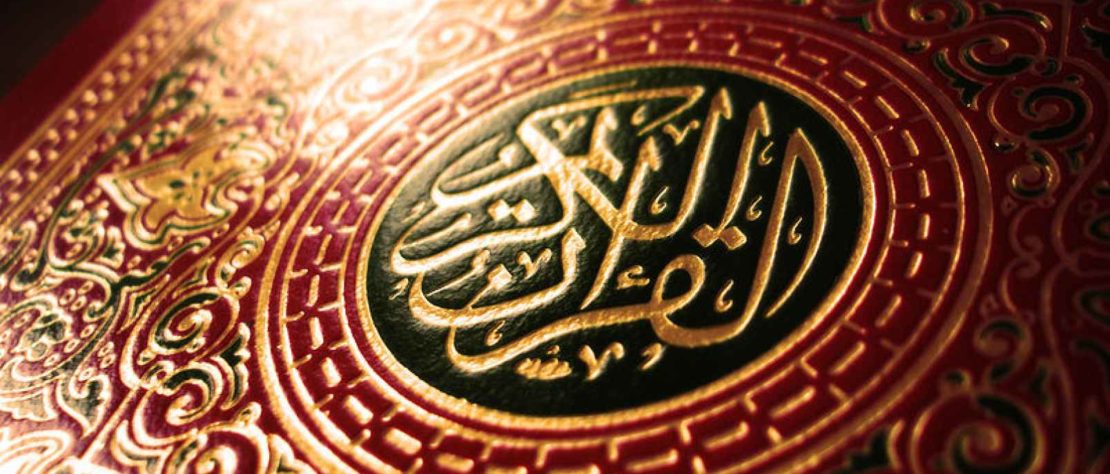
Esto es una respuesta al misionario artículo en un “error supuesto” en el Qur'. Nos sentimos básicamente que esta demanda la suya con respecto a este ser un “error” en el Qur' está descrita lo más mejor posible como “polémica inconsecuente”. Demandan eso “los problemas que este surah plantea debe ser evidente a cualquier persona al corriente del Qur' y de las tradiciones islámicas”, y reproducir el retórico del misionario, identifican el “primer problema” como: Primer problema: ¿Quién este Surah está refiriendo exactamente? (a) ¿La gente del libro (judíos, cristianos, quizás Sabians)? Primero, déjenos establecen la metodología correcta en nuestra interpretación del verso antedicho. Utilizaremos el Qur' para interpretar el Qur', como ésta es la metodología perfectamente aceptada como adoptado en exégesis anic de Qur'. Por lo tanto, si utilizamos el Qur' para interpretar el Qur', puede ser observado fácilmente que el Qur' los presentes muchos diversos tipos de disbelievers. Por lo tanto, una persona debe ir detrás y mirar con el Qur' para identificar que el tipo de “disbeliever” cabe la categoría del surah 109. Ésta es la manera correcta de entender el Qur'. Ahora, moviéndose encendido a “disputó” el surah, nosotros leen eso: “Opinión: ¡Disbelievers de O! Adoro no el que adoración del ye; Ni ye de la adoración el que adoro. Y no adoraré el que adoración del ye. Ni adoración del ye el que adore. A usted su religión, y a mí mi religión.” (Q. 109:1-6) Se establece en cualquier surah autoritario del profeta (p) que este verso es un surah de Makkan que fue revelado cuando los idolators en Makkah enfrentaron a profeta (P) con una “oferta” para contradecir a su público que predicaba en la ciudad. Por lo tanto la respuesta al retórico del misionario está (b). No vemos ciertamente cómo los misionarios podrían demandar que hay “problemas” en este verso en vista de en quién se dirige, cuando está claro que cualquier persona que entienda an-nuzul del asbab ¡de este surah no ve ningún problema en él! It should be noted that if a religion’s concept of God is incorrect even though there are some elements of truth in its conception of God, then Muslims will neither worship that God nor will the disbelievers worship our different concept of God (or otherwise it will negate their religion).The Qur’an never stated that any other religion’s concept of God is completely correct. This is clearly noted in ‘ayah 4:36, “…worship Allah and join none with Him in worship”. The so-called “second problem” generated by the missionaries is the claim that the above s?rah contradicts verses such as: “…our God and your God is One, and unto Him we surrender.” (Q. 29:46) To make things clear, the missionary is really claiming that his interpretation of ‘ayah 29:46 is in contradiction. Therefore, in order to arrive at the correct interpretation it is very important that we do not look at verses in a vacuum, and divorce it from the context — ‘ayahs 3:64 and 5:74 informs us that there is something false about the Christians’ understanding of God, and that they have too many gods in their belief (Trinity). This “God is One” has been clearly defined and excludes the Trinity or “sons of God”. Therefore, ‘ayah 29:46 is not stating that the Christians have a correct understanding of God in this verse or the correct number of Gods and Muslims share in that understanding. That is a false and twisted interpretation. Rather, the only other valid interpretation is that the Qur’an is teaching the Christians the truth about the God which they read about in the Bible, by reaffirming: “Our God and YOUR God is One.” (Q. 29:46) This phrase “God is One” has already been defined in the Qur’?n as one being without Trinity or a Son: “O people of the Scripture (Jews and Christians)! Do not exceed the limits in your religion, nor say of Allah aught but the truth. The Messiah ‘Isa (Jesus), son of Maryam (Mary), was (no more than) a Messenger of Allah and His Word, (”Be!” - and he was) which He bestowed on Maryam (Mary) and a spirit (Ruh) created by Him; so believe in All?h and His Messengers. Say not: “Three (trinity)!” Cease! (it is) better for you. For All?h is (the only) One Il?h (God), Glory be to Him (Far Exalted is He) above having a son. To Him belongs all that is in the heavens and all that is in the earth. And Allah is All Sufficient as a Disposer of affairs.” (Q. 4:171) Here we see God directly addressing both the Jews and Christians (with special reference to the latter). Notice how the phrase “Allah (God) is one” is being used here to condemn the Christian understanding of God (Trinity, Sonship, Divinity of Christ), and also, to correct the false Christian understanding of the Christians but emphatically stating “for Allah is (the only) One Ilah! Therefore, if Christians believe that Jesus is God, part of a Trinity, or has a Sonship with God, they obviously do not belive in one God as defined by the Qur’an. Therefore, it is clear that when the Qur’an pronounces “God is One” to the Christians it is not agreeing with the Christian concept of God, rather it goes on the offensive in condemning and correcting their beliefs. Therefore, to rephrase this statement:
(b) ¿Los idolaters de Meccan?
If God is One = the God, without partners or a Trinity
then
Our God and your God, is God without partners or a Trinity
The author of the Qur’an is pronouncing to the Christian that GOD IS ONE! It is completely irrelevant as to what the Christians already believed about their God, it means nothing to the author of the Qur’an in ‘ayah 29:46 because the Qur’an is telling them what is the truth. Nevertheless, it is admitted that the Christians do worship this God but they worship this God in tandem with additional partners (’ayahs 3:64, 5:74).
It will always be a missionary fantasy to find “incoherance” or “problems” within the Noble Qur’an. The biggest problem in these types of discussions, however, is that the Christians have been duped into believing that they are strict monotheists who worship only one God, which is a totally false assumption from the start. Please also keep in mind that the Qur’an also clearly states that the Bible has been corrupted (’ayahs 2:79, 4:157), which would explain how the Christians fell into false doctrines about God.
We have used the traditional method of Qur’anic exegesis, i.e., al-Qur’an yufassiru ba’duhu ba’dan (different parts of the Qur’an explain each other). What is given in a general way in one place is discussed in detail in some other place in the Qur’an. What is dealt with briefly at one place is expanded in some other place.
And only God knows best!
Leave a Reply
You must be logged in to post a comment.