
Monthly Archives: March 2007
Saviour-gods Mutilated Throughout Antiquity
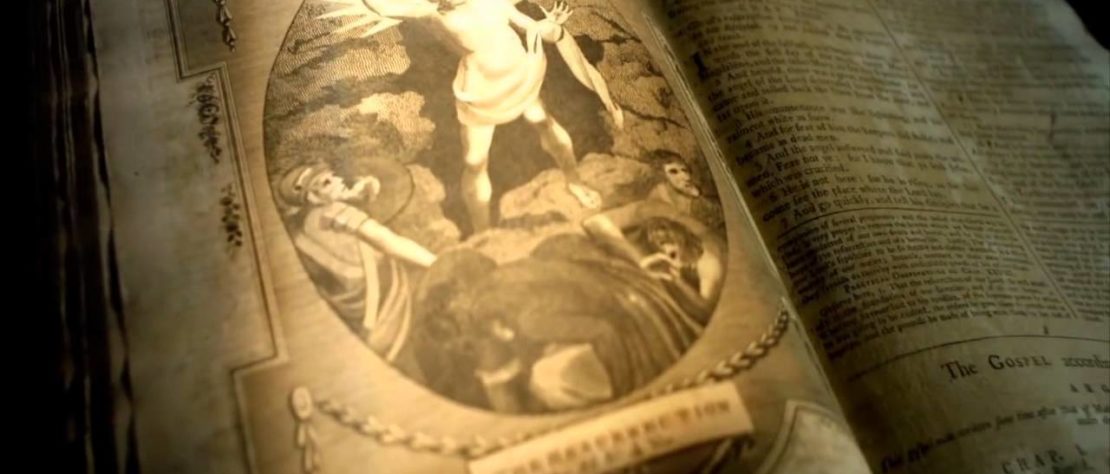
One of the big questions nobody has asked about Mel Gibson’s The Passion Of The Christ is this: If the crucifixion was a historic event and so central to the Christian Gospel, why is it that there is no evidence whatever of a man on a cross in Christian art and monuments for almost seven centuries? Not until 692 CE, in the reign of Emperor Justinian II, was it decreed that henceforth instead of a lamb (the zodiacal sign of Aries) fixed on the cross, the figure of Jesus be placed there instead. Another question: How is it that the earliest known figure of any man on a cross comes from about 300 BCE and that “person” is not Jesus but Orpheus, a mythical Greek sun-god?…Read More
Was Sarah really Abraham’s sister?
Was Sarah really Abraham’s sister? Ibn Hazm questions the status of Sarah as being Abraham’s sister, as accepting that viz., from the Biblical perspective would result in various disagreements with other passages in the Old Testament concerning moral and theological issues. This is in reference to the stories of Sarah’s seizure by Pharaoh and Abime’elech which was narrated in Genesis 12:10-18 and Genesis 20, Genesis 17:17 and Genesis 20:1-18. We cite the related passages on the story of the seizure of Sarah as follows….Read More
Does God change or does not change His Mind?
Does God change or does not change His mind? According to Ibn Hazm, Exodus 32:10-14 and 33:3-14 ascribes al-bada’ (changing of mind) to God and hence this presents a problem to the nature of God and His characters with regard to His All-Knowing attribute. When one compares the above passages side by side, the internal contradictions between especially Exodus 32:10, 32:14 and 33:2-3 on the one hand and Exodus 33:14 on the other, clearly raises many problems of theological and moral concern from the Biblical context. In this case that was quoted above, in spite of God’s determination to punish the Israelites for their idolatrous conduct, He did not execute punishment due to the intercession of Moses who had “reminded” God of His promise made with Abraham and the patriachs for their descendents. This Biblical passage seems to implicitly suggest that this “reminder” had made God realise his “wrong” decision and have Him repenting for it. Such an obvious “error” or even to imply such a thing is hardly befitting any person of integrity, let alone God, the Almighty….Read More
In the Fog of History: Review of G. R. Hawting, “The Idea of Idolatry and the Emergence of Islam. From Polemic to History”
The issue raised by this monograph thus can only exist, as a historical issue, if there is a marked difference between the Qur’an and what the author parenthetically calls “Muslim traditional literature.” This is precisely the author’s position, and he posits that a historical gap existed between the formation of the Qur’an and the appearance of this Muslim traditional literature (pp. 17-18). The Qur’an, according to the author, predates all the other literature. Moreover, the knowledge hitherto accepted as historical that we have about the rise of early Islam is not, according to the author, a product of the Qur’an but of this literature (which he defines as comprising everything but the Qur’an). The whole of the monograph is dedicated to proving that the Qur’an is not arguing against “real” pagans when it argues with the group it calls mushrikun, those who practice shirk or associationism, that is, worshiping other deities in addition to Allah. Rather, the author claims, the Qur’an is adopting a rhetorical stratagem that is very common to monotheistic traditions. To call someone a “pagan” or “idolater” was to label them as less Christian or less Jewish than the accusing faction. The same should be held true for the arguments in the Qur’an….Read More
The Usage and Significance of the New Testament Versions for Text Critical Purposes
“Versions” are simply the translations of the New Testament into other languages. The New Testament writers originally wrote their books and epistles in the Greek language whereas the versions are translations of their writings into other languages. Naturally, non-Greek speaking Christians wanted the text of the New Testament in their own local languages and so the New Testament began to be translated into other languages sometime in the mid to late second century. An important point to remember is that no matter how many thousands of translations exist, it remains that they are in a different language from the original language (Greek) of the New Testament, thus their use and value will be limited. …Read More
The Sign of Emmanuel
The authors of the New Testament have often quoted passages from the Old Testament, claiming such statements to be prophecies fulfilled in the person of Jesus Christ. The number of such quoted passages is actually very high. Among the evangelists, Matthew is the one having made this phenomenon characteristic to his Gospel. The prophecy carries a very important place in the Christian theology. Every Christian knows about the prophecies of the books of Psalms, Isaiah, and Daniel related to the childhood, life, mission, and death of Jesus. To every Christian, these prophecies are the clear evidence of the truth of Gospels and mission of Jesus in general. The problem is that according to the Bible, there exists true prophecies as well as false ones. Hence the question arises on the necessary criteria to distinguish a false prophecy from a true one….Read More