Hagarism: La historia de un libro escrito por Infidels para los Infidels


23 de abril de 2007

Liaquat Ali Khan

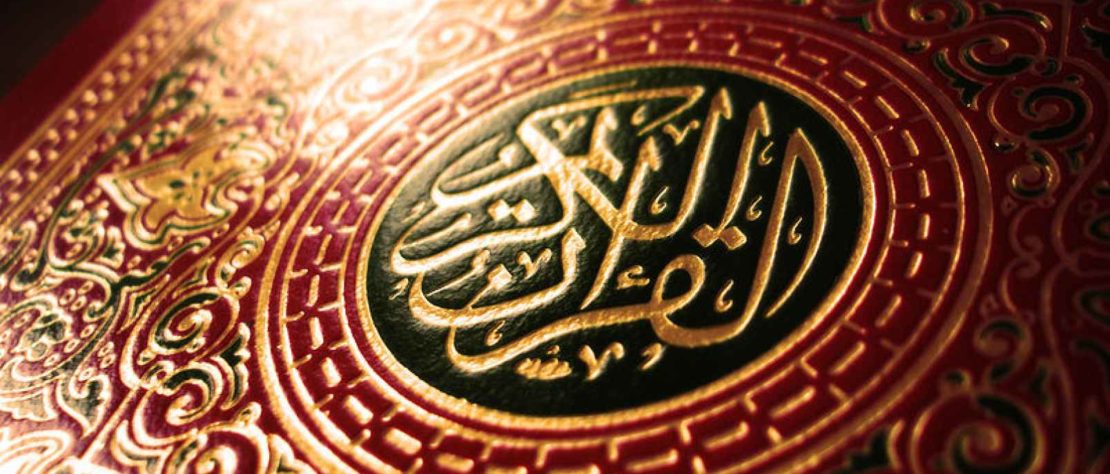
El libro titulado Hagarism: La fabricación del mundo islámico las preguntas apenas sobre todo los musulmanes creen como verdades históricas. Desafía la creencia común que el Qur' fue revelado al profeta Muhammad durante 22 años (610-632) en Mecca y Medina. En lugar, el libro afirma que el Qur' fue compuesto, posiblemente en Siria o Iraq, más de cincuenta años después de la muerte del profeta, proyectado detrás a tiempo, y atribuido al profeta. El Qur', según el libro, fue fabricado durante el reinado de Caliph Abdul Malik (685-705 C.E.) para legitimize un imperio que se ampliaba.

El libro también afirma que la palabra “musulmán” fue inventada en el 8vo siglo para substituir la palabra Muhajirun (inmigrantes), que era el nombre original de la comunidad árabe que conquistó Palestina y construyó la bóveda de la roca. El libro sí mismo prescribe un nuevo nombre para los musulmanes tempranos. Los llama Hagarenes, es decir, los descendientes biológicos de Abraham de Hagar. Este nombramiento racial de musulmanes tempranos se emplea para distinguirlos de los judíos, que son los descendientes de Abraham de Sarah. Hagarism, el título del libro, es un cuasi-pejorative, y posiblemente un racista, etiqueta para describir el fenómeno histórico de musulmanes tempranos.

En los autores' poseer palabras, se escribe el libro “por los infidels para los infidels.” Los ataques contra la autenticidad del Quran, la integridad del profeta, o la historia islámica no son nuevos. El Quran sí mismo reconoce ataques similares los unbelievers hechos mientras que el Quran era revelado. Para más que mil años, la beca occidental se ha determinado para exponer lo que considera ser “fundación fraudulenta” del Islam. En este sentido, Hagarism es otro libro en la descarga grande de la literatura del ataque.

Sin embargo, qué distingue este libro es el hecho eso sus autores, cocinero de Michael y Crone de Patricia, suscriben no más a sus resultados críticos. El 3 de abril de 2006, tenía una conversación de teléfono con el cocinero de Michael y hablamos Hagarism. Él dijo a mí el siguiente, que él confirmó más adelante por medio de un email: “La tesis central de ese libro era, yo ahora piensa, confundido. Over the years, I have gradually come to think that the evidence we had to support the thesis was not sufficient or internally consistent enough.” On April 6, 2006, I interviewed Patricia Crone, as well, to see what she now thinks about the book. She was even more candid in repudiating the central thesis of the book. She agrees with the critics that the book was “a graduate essay.” The book was published in 1977 when the authors lived in England. “We were young, and we did not know anything. The book was just a hypothesis, not a conclusive finding,” said Crone. “I do not think that the book’s thesis is valid.”

Many Western scholars, Christians and Jews, have dismissed Hagarism as a “thin argument” rather than “credible research.” One historian who appears to admire the book is Daniel Pipes, who has taught at Chicago and Harvard universities. Pipes, an embittered Zionist known for his ugly utterings against Islam and Muslims, argues that while Western scholars like Crone and Cook “in the role of termites” are eating away at the magnificent Islamic edifice, Muslims are “acting as though the beams and joints were as strong as ever.” Even Pipes, however, describes the book as “wild.” Notwithstanding scholarly repudiations, Internet websites continue to rely on the book to malign Islam, assuming that the book’s thesis is derived from credible research.

Even online Wikipedia features the book, citing a large quotation from Daniel Pipes. The article concludes: “Although this line of research is discounted by Islamic traditionalists, Western scholars have generally applauded Crone and Cook’s advances in tracing the origins of Islam.” When I insisted that Wikipedia provide a source to support the above conclusion, the editor added “citation needed” to the conclusion. As of today, no citation to support the conclusion has been furnished.

Part of the confusion arises from the fact that Cook and Crone have made no manifest effort to repudiate their juvenile findings in the book. The authors admitted to me that they had not done it and cater no plans to do so. Repudiating scholarly work is not easy because sometimes errors are intertwined with valid findings. No scholar is obligated to rewrite books to correct errors. Scholarly decency, however, demands that the authors officially repudiate a scandalous thesis, one in which they no longer believe and one that maligns the faith of more than a billion people.

It appears however that the authors do not wish to discount a book that launched their careers and brought to them contacts and fortune. Patricia Crone teaches at the Institute for Advanced Studies, the academic home of Albert Einstein, an institute that proclaims itself as “one of the world’s leading centers for theoretical research and intellectual inquiry.” Michael Cook is a chaired professor of Near Eastern Studies at Princeton University, who in 2002 (a few months after 9/11 terrorist attacks) received a $1.5 million Distinguished Achievement Award from the Mellon Foundation “for significant contribution to humanities research.”

One needs no brains to write against Islam in the Western world. After 9/11, anti-Islamic literature has become a big business that even acclaimed academics have generously exploited for self-promotion. In this milieu, repudiating even a false anti-Islamic book will be condemned as apostasy. We need not burn the book. Crone and Cook themselves must muster the courage and put out the brushfire they started three decades ago, albeit in youthful excitement.

Dr. Ali Khan is a professor of law at Washburn University School of Law in Topeka, Kansas. This excerpt is taken from his forthcoming law article, “The Externalist Scholarship on Islamic Law”, which will be published in Michigan State Law Review.

One Response to “Hagarism: The Story of a Book Written by Infidels for Infidels”

  1. Mohammed said on 3 May 2007:

    That should shut Denis Giron up :)

Leave a Reply

You must be logged in to post a comment.