Hagarism : L'histoire d'un livre écrit par Infidels pour des infidèles


23 avril 2007

Liaquat Ali Khan

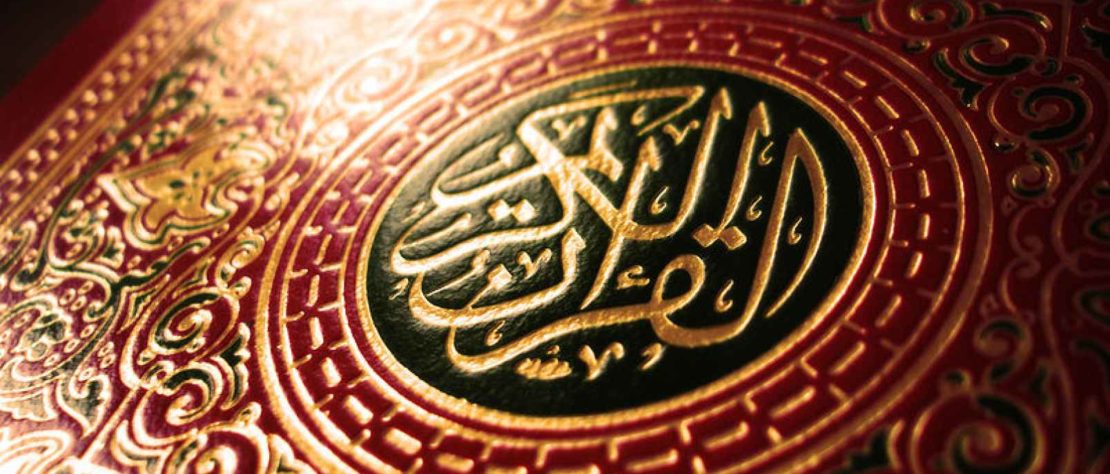
Le livre a intitulé Hagarism : La fabrication du monde islamique les questions juste au sujet de tout des musulmans croient en tant que vérités historiques. Il défie la croyance commune que le Qur' a été indiqué au prophète Muhammad pendant 22 ans (610-632) dans Mecque et Medina. Au lieu de cela, le livre affirme que le Qur' s'est composé, probablement en Syrie ou l'Irak, plus de cinquante ans après la mort du prophète, a été projeté en arrière à temps, et attribué au prophète. Le Qur', selon le livre, a été fabriqué pendant le règne du calife Abdul Malik (685-705 C.E.) pour légitimer un empire de extension.

Le livre affirme également que le mot « musulman » a été inventé au 8ème siècle pour remplacer le mot Muhajirun (immigrés), qui était le nom original de la communauté arabe qui a conquis la Palestine et a construit le dôme de la roche. Le livre lui-même prescrit un nouveau nom pour de premiers musulmans. Il les appelle Hagarenes, c'est-à-dire, les descendants biologiques d'Abraham par Hagar. Cette appellation raciale de premiers musulmans est utilisée pour les distinguer des juifs, qui sont les descendants d'Abraham par Sarah. Hagarism, le titre du livre, est un quasi-péjoratif, et probablement un raciste, étiquette pour décrire le phénomène historique de premiers musulmans.

Dans les auteurs' posséder des mots, le livre est écrit « par des infidèles pour des infidèles. » Les attaques sur l'authenticité du Quran, l'intégrité du prophète, ou l'histoire islamique ne sont pas nouvelles. Le Quran lui-même reconnaît les attaques semblables les unbelievers faits tandis que le Quran était indiqué. Pour plus que mille ans, la bourse occidentale a été déterminée pour exposer ce qu'elle considère comme « base frauduleuse » de l'Islam. Dans ce sens, Hagarism est encore un autre livre dans la grande décharge de la littérature d'attaque.

Cependant, ce qui distingue ce livre est le fait cela ses auteurs, cuisinier de Michael et femme de Patricia, ne souscrivent plus à ses résultats critiques. Le 3 avril 2006, j'ai eu une conversation de téléphone avec le cuisinier de Michael et nous avons parlé Hagarism. Il a dit à moi le suivant, qu'il plus tard a confirmé au moyen d'un email : « La thèse centrale de ce livre était, je pensent maintenant, confondu. Over the years, I have gradually come to think that the evidence we had to support the thesis was not sufficient or internally consistent enough.” On April 6, 2006, I interviewed Patricia Crone, as well, to see what she now thinks about the book. She was even more candid in repudiating the central thesis of the book. She agrees with the critics that the book was “a graduate essay.” The book was published in 1977 when the authors lived in England. “We were young, and we did not know anything. The book was just a hypothesis, not a conclusive finding,” said Crone. “I do not think that the book’s thesis is valid.”

Many Western scholars, Christians and Jews, have dismissed Hagarism as a “thin argument” rather than “credible research.” One historian who appears to admire the book is Daniel Pipes, who has taught at Chicago and Harvard universities. Pipes, an embittered Zionist known for his ugly utterings against Islam and Muslims, argues that while Western scholars like Crone and Cook “in the role of termites” are eating away at the magnificent Islamic edifice, Muslims are “acting as though the beams and joints were as strong as ever.” Even Pipes, however, describes the book as “wild.” Notwithstanding scholarly repudiations, Internet websites continue to rely on the book to malign Islam, assuming that the book’s thesis is derived from credible research.

Even online Wikipedia features the book, citing a large quotation from Daniel Pipes. The article concludes: “Although this line of research is discounted by Islamic traditionalists, Western scholars have generally applauded Crone and Cook’s advances in tracing the origins of Islam.” When I insisted that Wikipedia provide a source to support the above conclusion, the editor added “citation needed” to the conclusion. As of today, no citation to support the conclusion has been furnished.

Part of the confusion arises from the fact that Cook and Crone have made no manifest effort to repudiate their juvenile findings in the book. The authors admitted to me that they had not done it and cater no plans to do so. Repudiating scholarly work is not easy because sometimes errors are intertwined with valid findings. No scholar is obligated to rewrite books to correct errors. Scholarly decency, however, demands that the authors officially repudiate a scandalous thesis, one in which they no longer believe and one that maligns the faith of more than a billion people.

It appears however that the authors do not wish to discount a book that launched their careers and brought to them contacts and fortune. Patricia Crone teaches at the Institute for Advanced Studies, the academic home of Albert Einstein, an institute that proclaims itself as “one of the world’s leading centers for theoretical research and intellectual inquiry.” Michael Cook is a chaired professor of Near Eastern Studies at Princeton University, who in 2002 (a few months after 9/11 terrorist attacks) received a $1.5 million Distinguished Achievement Award from the Mellon Foundation “for significant contribution to humanities research.”

One needs no brains to write against Islam in the Western world. After 9/11, anti-Islamic literature has become a big business that even acclaimed academics have generously exploited for self-promotion. In this milieu, repudiating even a false anti-Islamic book will be condemned as apostasy. We need not burn the book. Crone and Cook themselves must muster the courage and put out the brushfire they started three decades ago, albeit in youthful excitement.

Dr. Ali Khan is a professor of law at Washburn University School of Law in Topeka, Kansas. This excerpt is taken from his forthcoming law article, “The Externalist Scholarship on Islamic Law”, which will be published in Michigan State Law Review.

One Response to “Hagarism: The Story of a Book Written by Infidels for Infidels”

  1. Mohammed said on 3 May 2007:

    That should shut Denis Giron up :)

Leave a Reply

You must be logged in to post a comment.