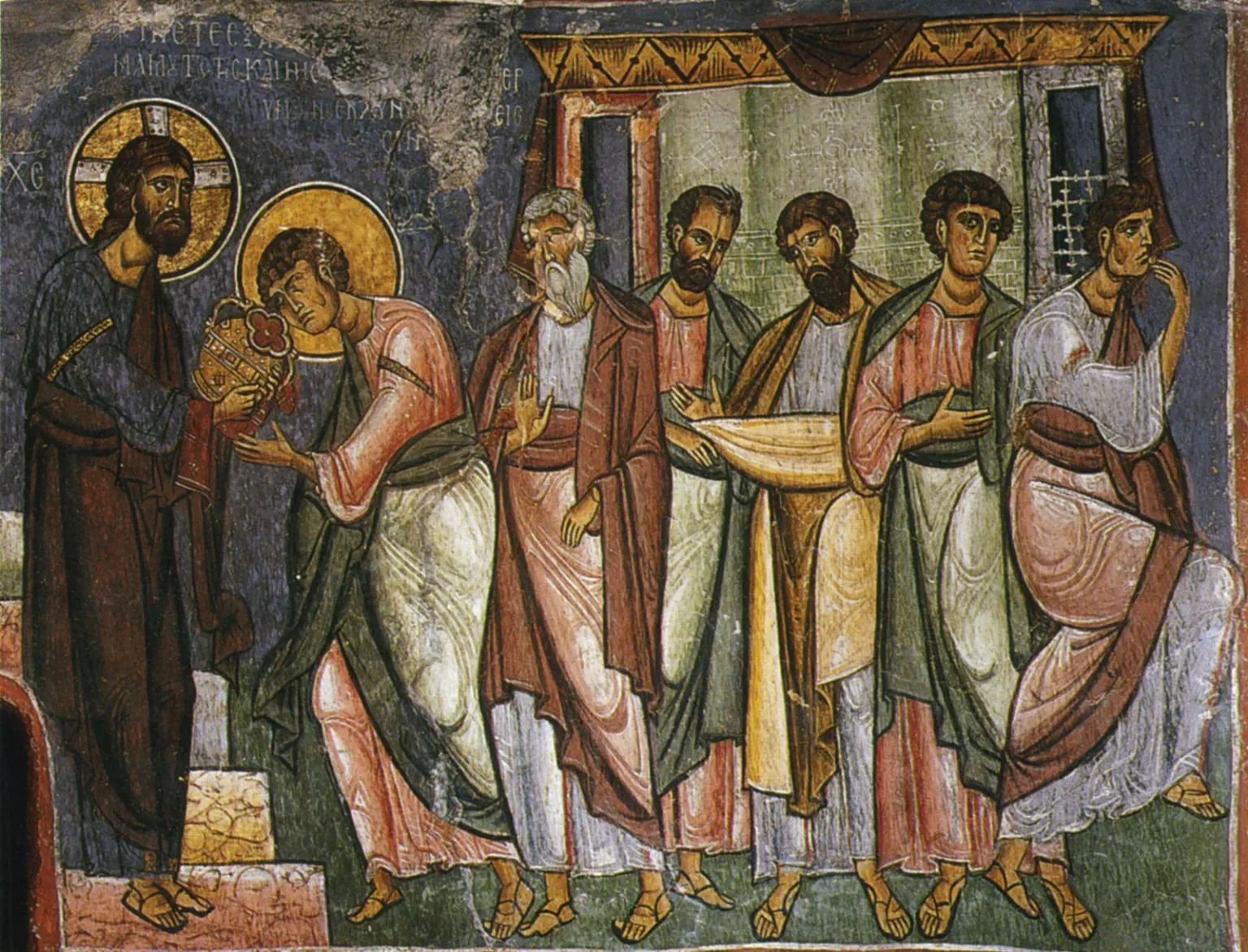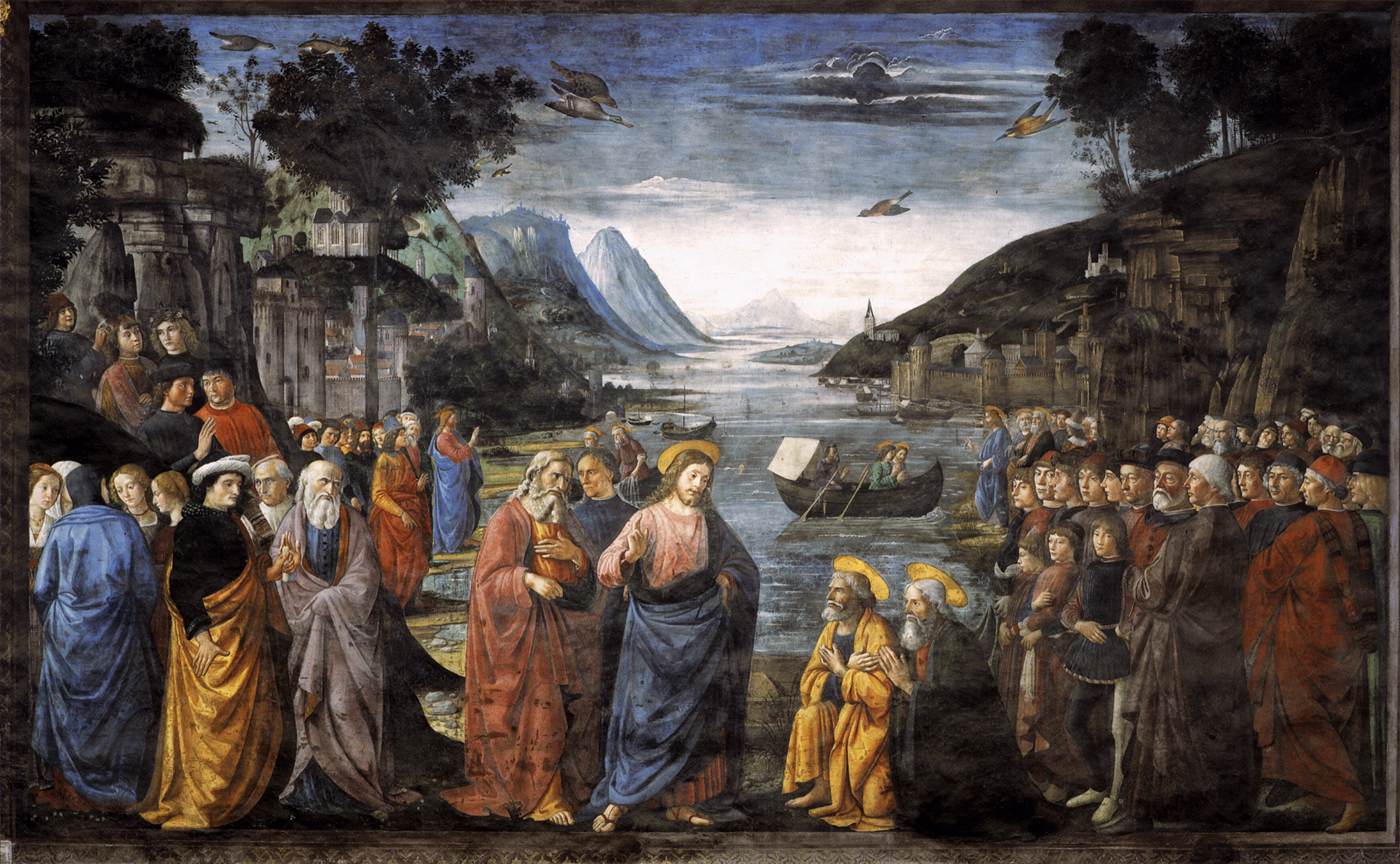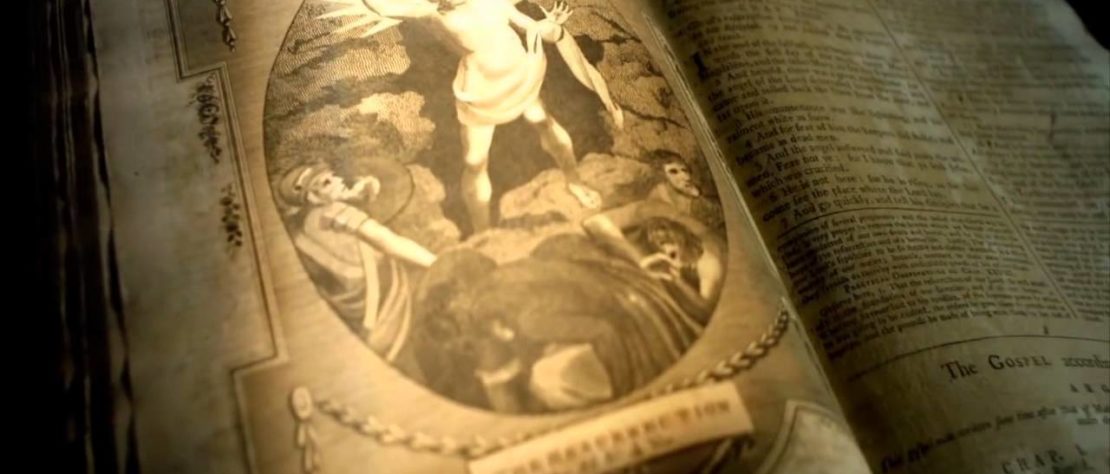

Una de las preguntas grandes nadie ha preguntado por los Mel Gibson La pasión del Cristo es esto: ¿Si el crucifixion era un acontecimiento y tan una central históricos al evangelio cristiano, por qué es ese allí no es ninguna evidencia lo que de un hombre en una cruz en arte cristiano y de los monumentos por casi siete siglos? No hasta el CE 692, en el reinado del emperador Justinian II, estaba decretó que en adelante en vez de un cordero (la muestra zodiacal del aries) fijado en la cruz, la figura de Jesús esté puesta allí en lugar de otro. Otra pregunta: ¿Cómo es que la figura sabida más temprana de cualquier hombre en una cruz viene de cerca de 300 BCE y que la “persona” es no Jesús sino Orpheus, sol-dios griego mítico? ¿Más perceptiblemente, por qué había tan muchos crucificados o los salvador-dioses de otra manera mutilados en antigüedad? Uno tiene pensar solamente del corte a los pedazos del Osiris resucitado más último, o de Horus, o Dionysus, o Prometheus, o muchos más héroe-divinities semejantemente torturados. Los sepulcros de la tela del erudito escribieron una vez un libro titulado El mundo dieciséis crucificó a salvadores: Cristianismo antes de Cristo. El seminario no me dijo eso. La pregunta debe presentarse seguramente en las mentes que están acostumbradas al pensamiento y no apenas a aceptar cada historia presentada por el estado, la religión, o los medios en su valor superficial: ¿Podría haber un cierto significado más profundo a este mito de morir-levantamiento entero del dios que hace estallar para arriba por todas partes en el mundo antiguo? ¿No era el error más grande de Gibson de los Mel la sangre derramada ubicua y ever-so-carefully filmada en su sermón de dos horas sino el hecho de que él tomó absolutamente literalmente algo que se puede entender solamente correctamente en el contexto de qué simbolismo del crucifixion está todo alrededor? No incurra en ninguna equivocación: Los sages antiguos que idearon los grandes mitos de Sumer, Chaldea, Egipto, y Grecia no tenían el interés más leve de la historia externa como la sabemos. Su preocupación importante era las verdades eternas del corazón humano y de los secretos de nuestra evolución interna, espiritual.
Cada dios en cada religión antigua tuvo que sufrir y morir para representar dos realidades: Que cada uno de nosotros es un portador de un fragmento o de una chispa del deity.
El dios tiene carne convertida en cada uno de nosotros. This is the God within or, in Christian terms, “the Christ in you.” It’s the inner meaning of the Christian doctrine of the Incarnation. This was a costly sacrifice, a divine outpouring in love and pity for the animal-human that could only be expressed symbolically as a tearing into pieces of God’s very being. The ancients said: “The gods distribute divinity.” The giving out of pieces of bread at a Eucharist — an almost universal phenomenon globally in every early culture — is precisely about this sacrificial distribution of divine energies. The body of humanity and the “body” of God are re-membered or put back into one grand harmony in this symbolic act. The same is true of the shared cup of wine — a ritual partaking of the spiritual essence of God’s life. However, in the 3rd century CE, the Church succumbed to the temptation to pander to the ignorance of the masses and so took the old esoteric doctrine, simplified it and turned it into literalized history. The truth about God coming in man — i.e., into every human — to raise us up, became a literal story about God coming as a man. To make sure this story stuck, all pagan opposition was quelled with an unequaled fury. Mystery schools and philosophical academies were closed down, libraries of books were burned, and anathemas were hurled at all who dared to raise objections. Those who risked everything by pointing out that the Christians had taken over all the old Pagan myths, rites, and ceremonies but transformed them by literalizing everything were either banished or killed. That so-called “pious frauds,” forgery and deceit of every kind were widely used in a cover-up is testified to by some of the early Christian apologists themselves. Even the major church historian, Eusebius — as shifty a writer as one could imagine, according to Edward Gibbon — gloated over the fact that he managed (in his account) to “make everything right” for the Church. There is glorious good news at the heart of the Christian message but Gibson’s film with its ponderously literalist approach doesn’t even come close to it. It’s small wonder there is so much violence in the world if the God behind and through it all condones — no, demands — the literal kind of violence Gibson has proved himself so proficient at putting on the screen. But, it’s not only the violence that is so off-putting. It’s the misunderstanding of what the New Testament drama is actually about. One can’t blame Gibson. The Church itself has to face the enormity of the harm its failure to understand its own message has brought to millions through the centuries. Tom Harpur’s latest book is The Pagan Christ: Recovering the Lost Light (Thomas Allen)
Subscribe
Subscribe Articles With
Bloglines, Google Reader, My MSN, Netvibes, Newsburst
Newsgator, Odeo, Pluck, Podnova, Rojo, My Yahoo!, Desktop Reader
By Month
Most Popular Articles
- The Authentic Gospel of Jesus: Evidence That Demands Christians Rethink Their Faith
- The Consensus on Homosexuality and The Illiteracy of Christian Polemicists
- Missionary Activity in Kosovo and the Causes of Muslim Conversions
- Learning Christianity in five minutes
- Response To "Muhammad as Al-Amin (the Trustworthy): How His Enemies Really Viewed Him" And The Christian Missionaries
- An Eye-Opening Biblical Narration
- Another Rational Approach to the Prophethood of Muhammad (P)
ABarton said on 18 May 2007: