救主是真正的


2007年4月7日

粗绒布裤坟墓

它unwarrantably由Christian作家假设异教的体现的神和被迫害的救主是所有或者仅仅美妙的字符,或者普通的人投资了以神的标题,并且占卦属性; 当,另一方面,假定投入以相等的大胆时耶稣基督是一位真正的神的要人, “看见和相信在世界上和最后迫害在登上受难像”。

但我们在历史上不发现事实担保任何如此假定或任何如此分别。 他们所有立场在这些方面在同样地面和在同等立足处。

并且他们的各自门徒在天堂指向这同一证据证明他们真正的存在和他们神的字符和证明,他们在人之中曾经走了并且谈了话,以及现在坐永恒王位“在父亲的右手”。 并且我们在大多的地球上寻找甚而基督徒作家承认一次诚实或个人存在异教的救主。1

至于二院长印度- Chrishna和Sakia的体现的神-那里缺乏地是 “钉离开垂悬疑义在” 至于下降对地球,被采取在他们自己人的形式和被崇拜作为确实的神的事实他们。

的确,我们相信,但是参观了那个国家问题声明和一般信仰流行那里他们的一次个人现实的少数传教士。 Col. 托德,在他的 Rajahs的历史 (p。 44),认为:

“我们必须放弃想法Mahabaret、Rama的历史, Chrishna和五个Padua兄弟是仅仅讽喻; 巨大图、古老寺庙和洞题写与字符,未知数,证实现实和他们的种族、他们的城市和他们的硬币,存在”。

进一步要争论这被迫害的上帝的个人现实是浪费词,它由历史作家和传教士一般承认。

先生。 Higgins宣称, “Chrishna居住在脸大年龄的结论,被计算是一千一百或十二一百年在基督之前”。 这一个非常正面和具体声明至于他有形的事实。 Col. Dow, Mr, Robinson, and others use similar language.

Relative to Bacchus, of whose history many writers have spoken as being wholly fabulous or fictitious, Diodorus Siculus says (lib. iii. p. 137), “the Libyans claim Bacchus, and say that he was the son of Ammon, a king of Libya; that he built a temple to his father, Amraon.” And that world-wide famous historian (Mr. Goodrich) is still more explicit, if possible, as to his material entity. After giving it directly as his opinion that there was such a being, he says, “He planted vine-yards and fig-trees, and erected many noble cities.” He moreover tells us, “His skill in legislation and agriculture is much praised” (p. 499).

With respect to Osiris of Egypt, another God-Savior, Mr. Hittle declares unqualifiedly that “Herodotus saw the tomb of Osiris, at Sais nearly five centuries before Christ” (vol. i.p. 246). Rather a strong evidence of his previous personality certainly, but not more so than that furnished by the New York, Journal of Commerce a few years since, relative to the Egyptian Apis or Thulis, whose theophany was annually celebrated, at the rising of the Nile, with great festivities and devotion, several thousand years ago. The Paris correspondent of that journal, after speaking of Mr. Auguste Marietta’s travels, “a distinguished scientific gentleman who for four years past had been employed by the French Government in making Egyptian researches,” having returned home, says, “The most important of Mr. Marietta’s discoveries was the tomb of Apis (Thulis), a monument excavated entirely in lime-rock. “There are (he says in conclusion) epitaphs, forming a chronological record of each of the Apis buried in the common tomb. The sculpture is of the date of the Pyramids, and the statues are in the best state of preservation; the colors are perfectly bright. The execution is admirable, and they convey an exact idea of the physical character of the primitive population.”

The New American Cyclopedia (art. Apis) in speaking of this Egyptian God, tells us his lifetime was twenty-five years; in harmony with one of the theologics-astronomical cycles of the Egyptians. The same work and volume (p. 132), in speaking of the real existence of Adonis of Greece, tells us, upon the authority of the poet Panyasis, that he was a veritable son of Theias, king of Syria.

But of all the characters who figured in the mythological works or lawless rhapsodies of the ancients, and worshiped by them as crucified Gods and sin-atoning Saviors, none has, perhaps, been so indubitably, so positively, and so universally set down as mythological or fabulous as that of Prometheus of Caucasus.

And yet Mr. Lempriere, D.D., tells us in his Classical Dictionary that he was the son of Japetus. Sir Isaac Newton say he was a descendant of the famous African Sesostris; while that erudite and masterly historian (Mr. Higgins) seems to have entertained no doubt of his personal esse; nor, indeed, of many, if any, of the pagan Saviors, as the following declaration will show. He says,

“Finding men in India and other countries of the same name of the inferior Gods (as it is quite common to name men for them) has led some to conclude that those deified men never existed, but are merely mythological names of the sun. True, the first supreme God of every nation (not excepting the Jews) was the sun. But more modernly the names were transferred to men.”

Again, he says,

“Inasmuch as some of them are found to have been real bona fide human beings, there is nothing unreasonable in concluding that all were.”

And if we take into consideration the true and indisputable fact that the priests had everything at their disposal, and the strongest motives for concealing and suppressing, not to say garbling and destroying evidence, it is not to be wondered at that the histories of some of these Gods should be somewhat obscure and ambiguous. Further on he declares,

“In every case the Savior was incarnate, and in nearly every case the place in which he was actually born was exhibited to the people.”

And upon the authority of the Hierophant, we will add, the memories of many of them have been consecrated and perpetuated by tombs placed beside their temples, which is perhaps the most convincing species of evidence that could be offered.

The evidence, then, is precisely of the same character as that offered in the case of Jesus Christ to prove that the pagan Saviors did really possess a substantial, earthly and bodily existence. Though it is true that it never has been universally conceded or believed by Christian themselves that Jesus Christ ever had a personal or corporeal existence on earth.

Cotilenius, in a note on Ignatius, Epistle to the Trallians, written in the third century of the Christian era, declares that “it is as absurd to deny the doctrine which taught that Jesus Christ’s body was a phantom as to deny that the sun shone at midday.” His physical body of course was meant, for it appears he believed in his eternal existence as a spirit in heaven.

And we find whole sects advocating similar views in the early ages of the Christian church. “One of the most primitive and learned sects,” says a writer, “were the Manicheans, who denied that Jesus Christ ever existed in flesh and blood, but believed him to be a God in spirit only; others denied him to be a God, but believed him to have been a prophet, or inspired character, like the Unitarians of the present day. Some denied his crucifixion, others asserted it.

It is more than probable that this was the cause of dispute between Paul and Barnabas, mentioned in the Acts of the Apostles, seeing that Paul had laid such peculiar emphasis on “Jesus Christ and him crucified.”

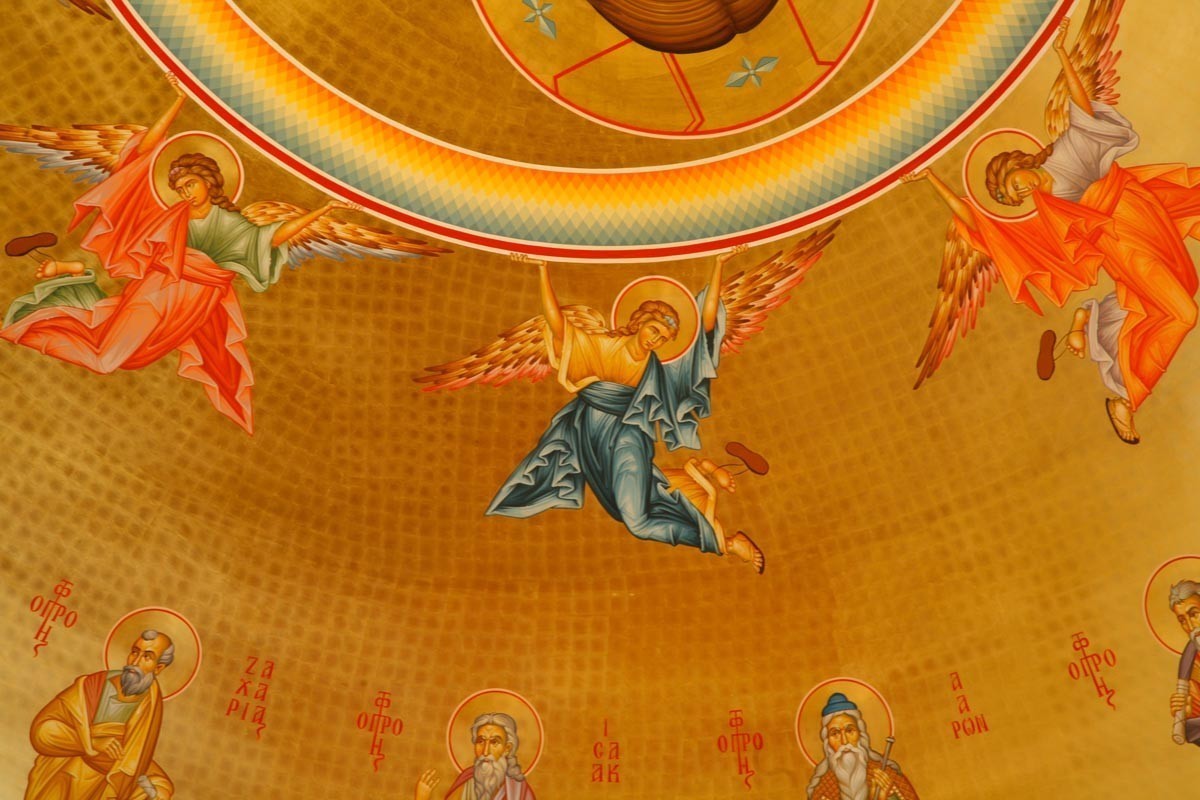
And this conclusion is corroborated by its being expressly stated in the Gospel of Barnabas that “Jesus Christ was not crucified, but was carried to heaven by four angels.” “There was a long list,” says the same writer, “from the earliest times, of sincere Christians who denied that Jesus Christ rose from the dead;” while, as we may remark here, there could not have been at that early date any grounds for denying these things, had he really figured in the world in the miraculous and extraordinary and public manner as that related in the Gospels.

  1. Kersey Graves, The World’s Sixteen Crucified Saviors, Chapter 15, “The Saviors Were Real Personages” [back]

One Response to “The Saviors Were Real”

  1. rob said on 15 April 2007:

    A CULT OF PARALLELS:
    PAGAN MYTHS AND THE JESUS STORY

    http://pages.ca.inter.net/~oblio/supp13D.htm

Leave a Reply

You must be logged in to post a comment.